Xiaomi MiMo Breaks 1,000 Tokens/s on 1T Model with Standard GPUs

MiMoMiMo

Xiaomi MiMo, in collaboration with TileRT, released MiMo-V2.5-Pro-UltraSpeed, achieving over 1,000 tokens/s output speed on a 1-trillion-parameter model using a single standard 8-GPU node. This breakthrough enables real-time AI applications and faster agentic coding by overcoming inference speed bottlenecks on commodity hardware.

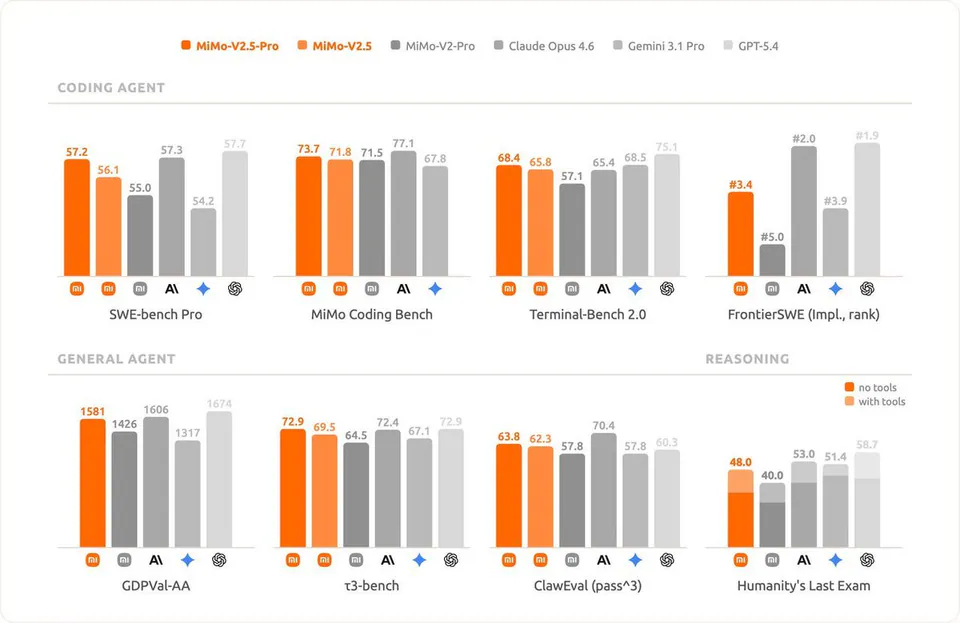
Xiaomi MiMo, in collaboration with TileRT, released MiMo-V2.5-Pro-UltraSpeed, a new mode for its 1-trillion-parameter model, reaching over 1,000 tokens per second (tps) on a single standard 8-GPU node. The speed comes from deep model-system co-design using FP4 quantization and DFlash speculative decoding — no specialized hardware required.
Output Speed
1,000+ tokens/s
Model Parameters
1 trillion (1T)
Hardware
Single, standard 8-GPGPU node
API Pricing
3x cost for ~10x speed boost
Access Window
June 9 – June 23, 2026 (PDT)
Open-Source Checkpoint
MiMo-V2.5-Pro-FP4-DFlash

This makes 1T models viable for real-time decision loops — high-frequency trading, anti-fraud, and surgical assistance — and removes inference latency as a bottleneck for agentic coding workflows. For comparison, DeepSeek V4 Pro reaches 150+ tps and Nemotron 3 Ultra 300+ tps.

Available in a limited window from June 9–23, 2026 (PDT), MiMo-V2.5-Pro-UltraSpeed offers free chat and an API at 3x the standard MiMo-V2.5-Pro price for ~10x the generation speed. The MiMo-V2.5-Pro-FP4-DFlash checkpoint is open-sourced on HuggingFace.

Xiaomi MiMo-V2.5-Pro UltraSpeed Mode delivers 1000+ tokens per second using standard GPUs for high-efficiency model performance.
Comparison of Xiaomi's MiMo-V2.5-Pro-UltraSpeed and MiMo-V2.5-Pro models generating code. The UltraSpeed variant completes the task in 12.35 seconds, while the standard Pro model takes over six minutes to finish the same request. The demo highlights the significant performance gains in token generation speed for the UltraSpeed version.
Xiaomi MiMo
Xiaomi MiMo
@XiaomiMiMo
X

🚀 1,000+ TOKENS/S ON A 1T MODEL! 🚀 We are thrilled to release Xiaomi MiMo-V2.5-Pro-UltraSpeed in collaboration with @TileRT_AI , breaking the 1,000 tokens/s output speed on a 1 Trillion parameter model for the FIRST TIME! Not wafer-scale integration like Cerebras. Not pure on-chip SRAM chips like Groq. We achieve 1,000 tps on a 1T MoE model using just a SINGLE, STANDARD 8-GPGPU NODE. Read the full technical deep dive:https://t.co/MX0kjHKdKi Want to experience the future of real-time AI? 👉 Apply for UltraSpeed now: https://t.co/aeWAxyhwVk ⏳ Limited-Time Access: Application-based · Jun 8 – Jun 23 (PDT) 💬 Chat Experience: Completely FREE for a limited time — try the blazing-fast web chat now. ⚡ UltraSpeed API: Just 3x the price for a ~10x boost in output experience. 🤝 Enterprise & Large-Scale Needs: business-mimo@xiaomi.com
284retweets2.2klikes
View on X

Still wondering? A few quick answers below.

Xiaomi MiMo-V2.5-Pro-UltraSpeed is a new mode for Xiaomi's 1-trillion-parameter AI model, developed in collaboration with TileRT. It achieves over 1,000 tokens per second in output speed using standard GPU hardware.

The speed is a result of extreme model-system co-design. This includes FP4 quantization, which reduces model size, and DFlash speculative decoding, an efficient method for parallel prediction, all optimized by TileRT's inference system.

The high speed enables real-time decision-making for complex tasks like high-frequency trading, instant anti-fraud, and surgical assistance. It also aims to significantly accelerate agentic coding workflows by reducing inference latency.

Access is currently application-based and available for a limited time from June 9 to June 23, 2026 (PDT). A free chat experience is offered, and the API is available at a promotional price.

Yes, Xiaomi MiMo has open-sourced the MiMo-V2.5-Pro-FP4-DFlash checkpoint on HuggingFace, which includes the FP4 quantized weights and DFlash model parameters.

Every HeadsUpAI update is written based on its original source and reviewed before it's published. Read our editorial standards →

Share this update