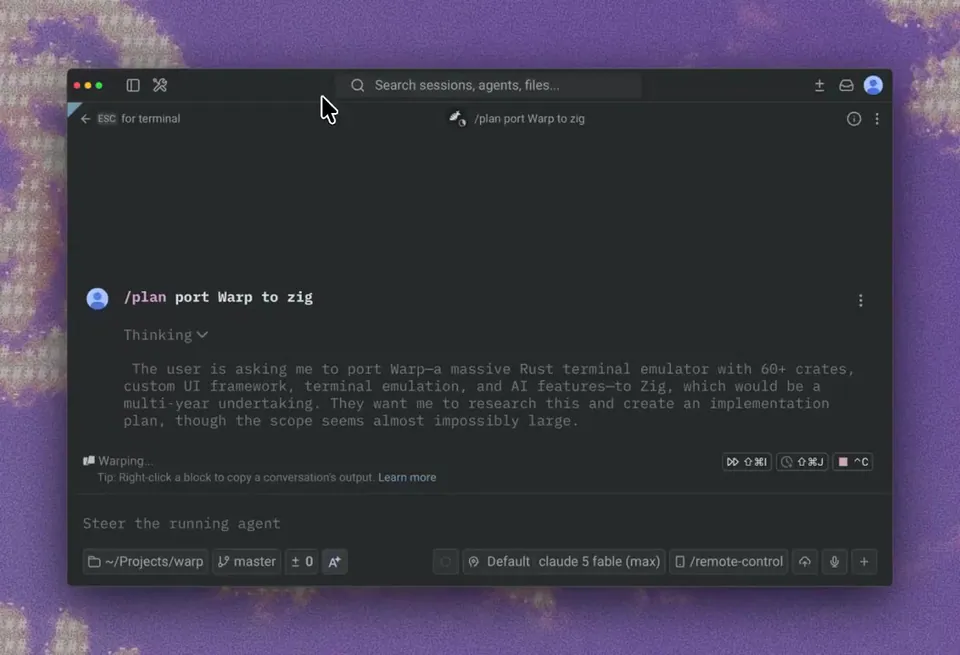
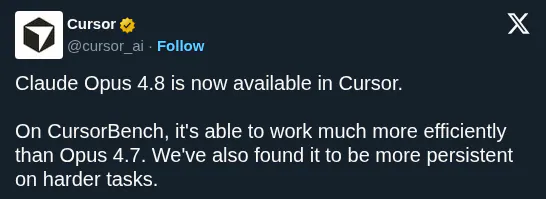
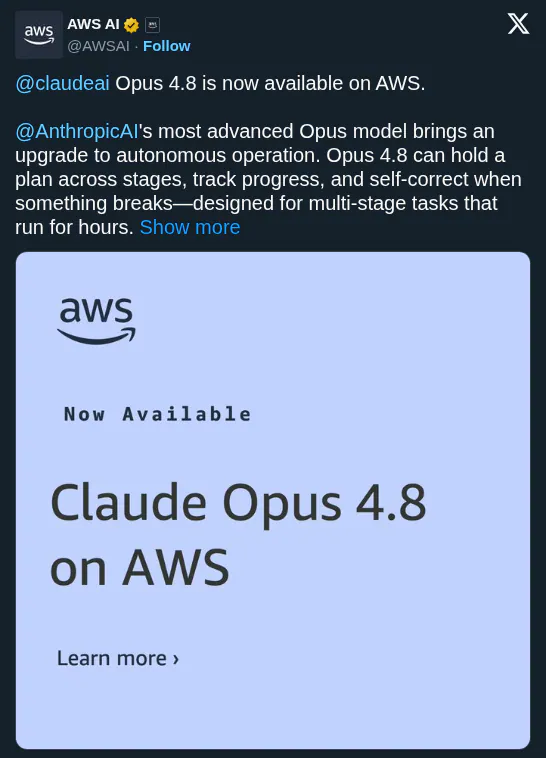
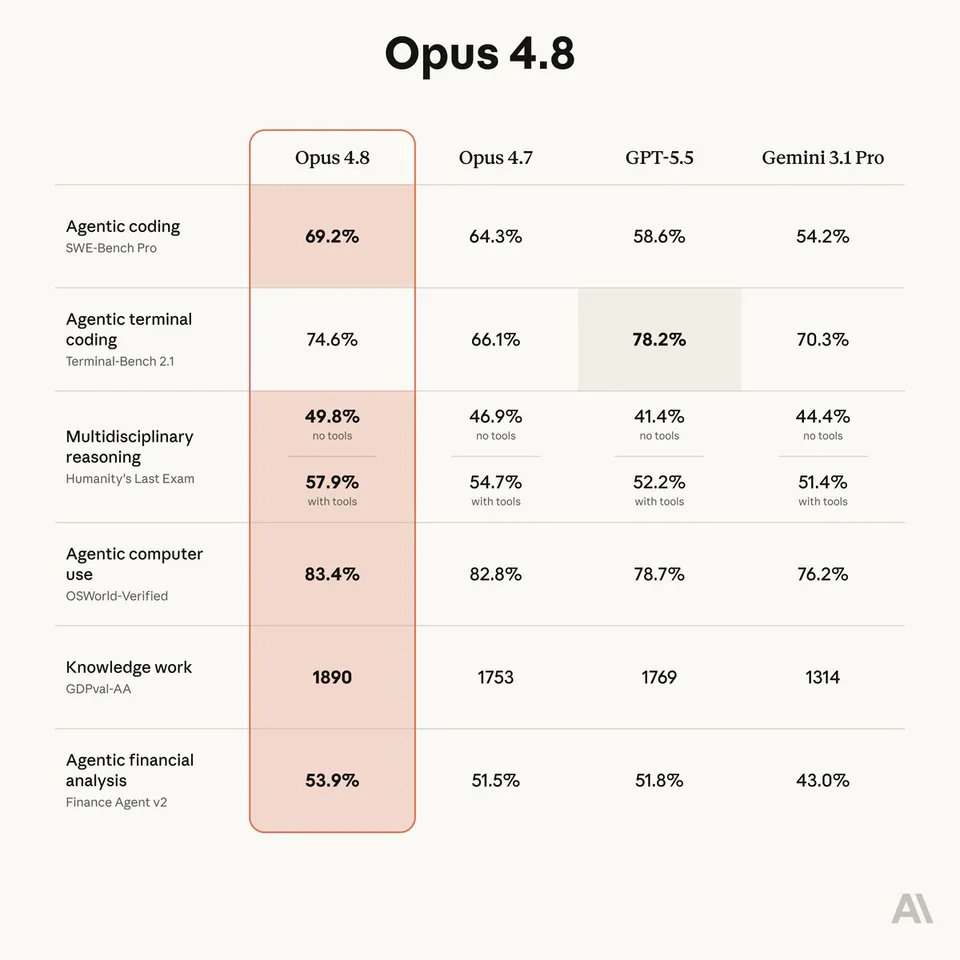
Warp now supports Claude Opus 4.8. Opus 4.8 is built for longer agent runs: planning up front, following through across multi-step coding tasks, and catching real bugs in review instead of stopping after one clean test run. https://t.co/Oih1U17hB3
Warp integrates Claude Opus 4.8 to enable autonomous multi step engineering tasks
Warp, an agentic development environment combining a terminal and code editor, integrated Anthropic's
Claude Opus 4.8 and Claude Opus 4.8 Fast. These models are optimized for longer agent runs—the ability for an AI agent to maintain logic over multi-step engineering workflows without constant human direction.- Model
- Claude Opus 4.8
- Fast mode cost reduction
- 3x vs Opus 4.7 Fast
- Agent capability
- Multi-step planning and self-review
- Infrastructure
- Warp Oz cloud platform
This integration follows Anthropic's Claude Opus 4.8 launch, which introduced improved autonomy for complex tasks. By bringing these capabilities into the terminal, Warp enables a shift from simple autocomplete to autonomous agents that perform upfront planning and self-review. This addresses failure modes where agents stop after a single successful test run.
You can now use these models for complex refactors and multi-step coding tasks. The Claude Opus 4.8 Fast variant offers a 3x cost reduction over the previous version, lowering the barrier for high-tier agentic coding. These models are available now and support Warp's automated cloud handoff for persistent background execution.
Warp
@warpdotdev
6retweets75likes
View on XStill wondering? A few quick answers below.
Claude Opus 4.8 is a frontier AI model integrated into the Warp terminal and code editor to power autonomous agentic workflows. It is specifically designed for long-horizon tasks, meaning it can handle multi-step coding sequences, perform upfront planning, and conduct its own code reviews to catch bugs before completing a task.
This model improves agentic coding by following through on complex tasks across multiple files rather than stopping after a single successful test run. It is built to catch real bugs during the review phase and maintain logic throughout longer agent runs, making it more reliable for autonomous software development and refactoring.
Claude Opus 4.8 is the flagship model optimized for complex reasoning and long-running autonomous tasks. Claude Opus 4.8 Fast provides similar high-level performance but is optimized for speed and cost efficiency. The Fast variant reduces costs by 3x compared to the previous Claude Opus 4.7 Fast model.
Yes, Claude Opus 4.8 supports agentic workflows that can be moved to the cloud using Warp's orchestration platform. This allows long-running coding tasks to continue executing persistently even after a developer closes their local terminal or laptop, ensuring that complex engineering work is not interrupted by local hardware states.
These models are available to developers using the Warp agentic development environment. Users can select Claude Opus 4.8 or the more cost-effective Claude Opus 4.8 Fast to power their terminal-based AI agents. The integration is live now for users looking to leverage Anthropic's latest reasoning capabilities within their terminal.