
Cursor
@cursor_ai
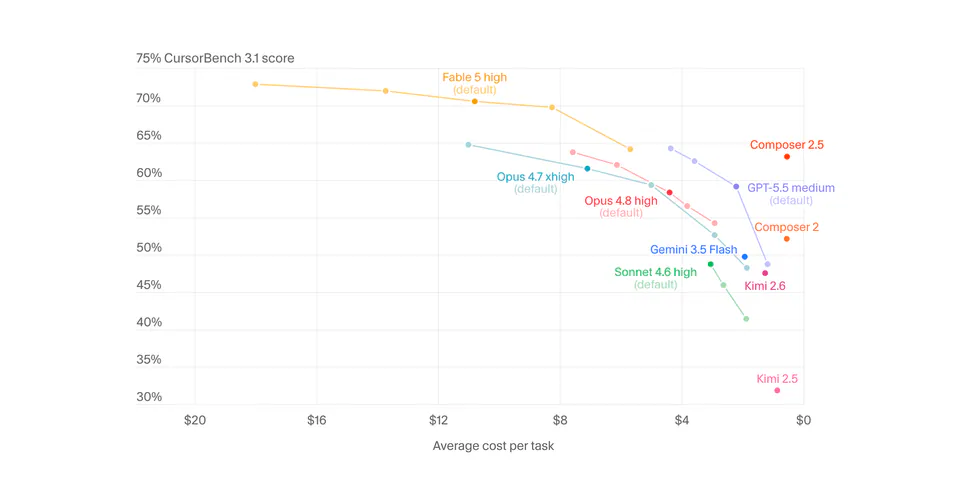
Claude Opus 4.8 is now available in Cursor. On CursorBench, it's able to work much more efficiently than Opus 4.7. We've also found it to be more persistent on harder tasks.
157retweets3.9klikes
View on X Cursor
· Updated
Cursor added Anthropic's Claude Opus 4.8 to its AI-native code editor, delivering a performance jump on internal benchmarks for complex, multi-step tasks. The update introduces a thinking-token variant and a significantly cheaper fast mode, prioritizing model persistence across large codebases.
The release follows a rapid cycle where Cursor's GPT-5.5 integration recently led internal evaluations. By adding Opus 4.8, Cursor responds to the Claude models' Arena coding leaderboard sweep. The model shows a meaningful gain on CursorBench, specifically in its ability to self-correct during long, autonomous agent sessions.
You can access Opus 4.8 now through the Cursor model selector. While it remains the most expensive tier, a new fast mode is available at $10 per million input tokens—roughly 3x cheaper than Windsurf's Claude Opus 4.7 fast mode integration. Usage draws from your plan's standard API pool.
Claude Opus 4.8 is now available in Cursor. On CursorBench, it's able to work much more efficiently than Opus 4.7. We've also found it to be more persistent on harder tasks.
Still wondering? A few quick answers below.
Every HeadsUpAI update is written based on its original source and reviewed before it's published. Read our editorial standards →
More like this
 CursorJun 10
 WarpMay 28
 AnthropicMay 18
 OpenRouterMay 28