HeadsUpAI

Warp Open Sources Client Codebase and Rebrands as Agentic Development Environment

· Updated

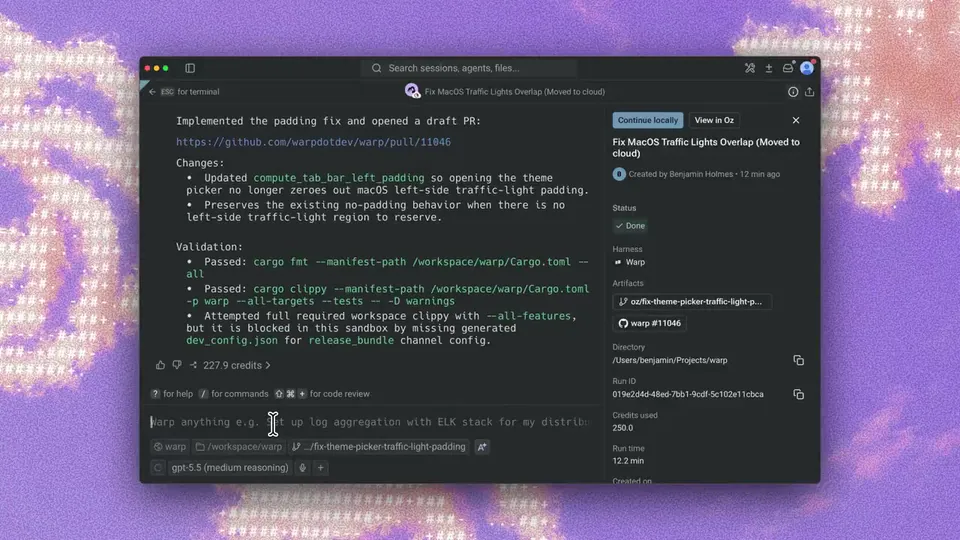
Warp, an agentic development environment (a platform for orchestrating autonomous AI agents), has open-sourced its client codebase. The repository, which lists OpenAI as a founding sponsor, includes the UI framework under an MIT license and the core logic under AGPL v3. This follows recent updates to Warp's agent speed and human-in-the-loop feedback tools.

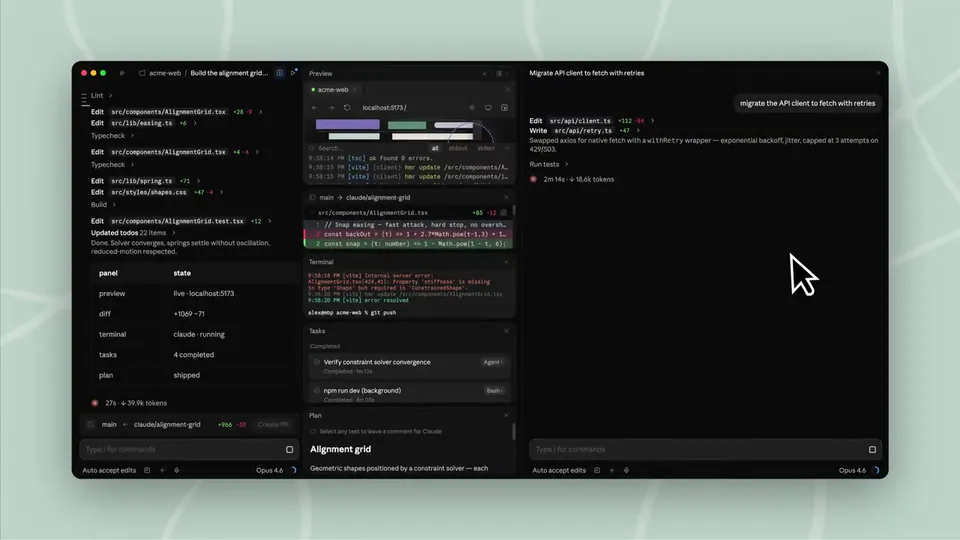
The move addresses developer demands for transparency while positioning Warp as the central orchestration layer for CLI-based agents. By opening the code, Warp aims to become the standard interface for steering agents, mirroring the industry shift toward unified agent workspaces seen in IDE-first competitors.

You can now audit the codebase, contribute to the public roadmap, or use the new /feedback skill to open GitHub issues directly. The environment supports built-in agents or third-party tools like Claude Code and Gemini CLI. The repository is on GitHub, while the Oz platform remains the cloud-based layer for managing agent state.

Still wondering? A few quick answers below.

Warp is now open source under a dual-license model. The UI framework crates are licensed under the MIT license, while the rest of the client codebase is licensed under the AGPL v3. This allows developers to audit the code, contribute to the public roadmap, and build the terminal locally on macOS and Linux platforms.

An Agentic Development Environment is a platform designed to host and manage autonomous AI agents directly within the development workflow. Unlike a standard terminal, it provides a unified harness for orchestrating agents that can plan, write code, and execute commands. Warp uses a cloud-based orchestration platform called Oz to manage these multi-step agentic loops.

Yes, Warp is designed to be a flexible harness for various AI agents. You can use the built-in agentic workflows powered by GPT models or bring your own command-line agents such as Claude Code, Codex, and Gemini CLI. This allows you to manage different specialized agents within a single terminal interface for complex software development tasks.

To build Warp from source, you first run a bootstrap script for platform-specific setup. You then use a run script to build and launch the application, and a presubmit script to handle formatting and testing. Detailed engineering guides are provided in the repository to help external contributors set up their local environment and follow the project's coding style.

OpenAI is the founding sponsor of the open-source Warp repository. While the client codebase is now public, the agentic management workflows within the environment are specifically powered by OpenAI GPT models. This partnership supports Warp's transition from a proprietary terminal to an open platform focused on AI-driven development and agent orchestration.

Share this update