Google Launches Deep Research API and Moves Multimodal Embeddings to Production

GoogleGoogle

Google transitioned Gemini Embeddings 2 to general availability and launched the Deep Research API for autonomous agentic workflows. By bundling AI Studio with consumer Pro plans and adding system-wide billing caps, Google is lowering the barrier for developers to move from prototyping to production-grade applications.

Google moved Gemini Embeddings 2 to general availability, transitioning its first natively multimodal embedding model (a system that maps text and media into a single vector space) into a production-ready state. The update also introduces the Interactions API, providing programmatic access to the Deep Research and Deep Research Max autonomous agents.
Embeddings status
General Availability
Research Agents
Deep Research, Deep Research Max
Access Method
Interactions API
Subscription Integration
AI Pro and Ultra plans
Billing Safety
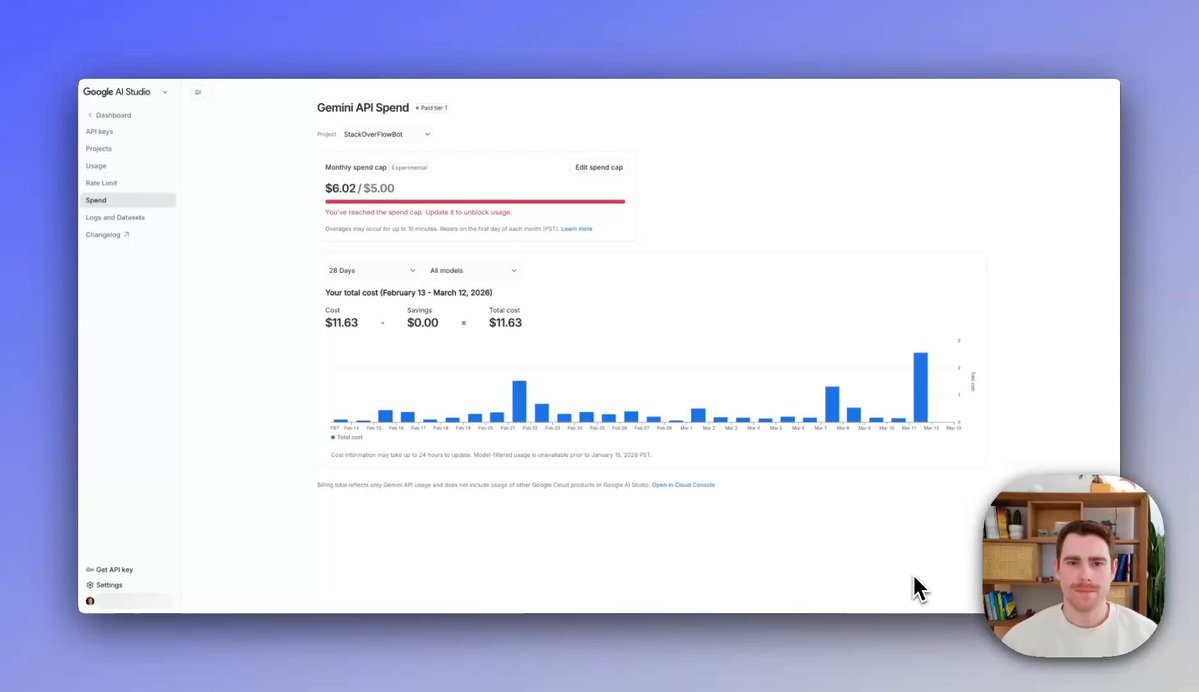
System-wide spending caps
Design Format
DESIGN.md (open source)

This shift signals a move toward enterprise-grade reliability for multimodal RAG (grounding AI responses in external data) and agentic workflows. By implementing system-wide spending caps, Google is addressing the financial risks of autonomous agents. This follows the release of multimodal search applications and a universal design language.

You can now use Google AI Studio with increased limits through AI Pro or Ultra subscriptions. The environment now supports multi-chat contexts and web search grounding for retrieving live documentation. For consistency, the Stitch tool allows you to transfer design rules using the open-source DESIGN.md format.

Google AI Developers
@googleaidevs
X

EOW drop list 🚀 See what’s rolled out in prod ⬇️ G1: @GoogleAIStudio is now included with AI Pro and Ultra plans — providing increased usage limits and premium features, no API key needed. Multi-chat and web search support in @GoogleAIStudio Build: 1. Start a new chat with a fresh context state from within the code assistant using the “+” icon in the top right — and return to previous chats when helpful! 2. The agent can now search the web for up-to-date info, allowing responses to be grounded in the latest API docs and info. Deep Research: Get started with Deep Research and Deep Research Max, our new autonomous research agents, via the Interactions API. Gemini Embeddings 2 GA: Move multimodal projects into production, available via the Gemini API. Gemini API Billing account spending caps: The new system-wide cap on potential usage overrun ensures users avoid unexpected overage charges. Stitch: Transfer design rules across platforms using the app’s open source DESIGN.md format.

3retweets51likes
View on X

Still wondering? A few quick answers below.

Google AI Studio is now included with AI Pro and Ultra plans, allowing subscribers to access the prototyping environment without needing a separate API key. This integration provides increased usage limits and premium features directly within the browser. Users can start building and testing Gemini models immediately using their existing Google subscription credentials.

The Deep Research API allows developers to integrate Google's autonomous research agents, Deep Research and Deep Research Max, into their own applications. These agents are designed to perform complex, multi-step research tasks independently. Developers can access these capabilities through the Interactions API to build workflows that require deep information gathering and synthesis without constant human direction.

Gemini API billing account spending caps are a new system-wide safety feature designed to prevent unexpected overage charges. By setting a maximum limit on potential usage overrun, developers can ensure their projects do not exceed a defined budget. This is particularly important for autonomous agents that might otherwise consume significant resources during long-running or iterative tasks.

Gemini Embedding 2 is Google's first natively multimodal embedding model, now generally available for production use. It converts text, images, audio, video, and documents into a single vector space, enabling advanced semantic search and retrieval across different types of data. This allows developers to build more accurate retrieval-augmented generation systems that understand context across multiple modalities.

Web search support in Google AI Studio allows the built-in AI agent to browse the internet for up-to-date information. This capability ensures that the model's responses are grounded in the latest data, such as current API documentation or recent news. Users can trigger this feature within the chat interface to improve the accuracy and relevance of generated code or information.

Every HeadsUpAI update is written based on its original source and reviewed before it's published. Read our editorial standards →

Share this update