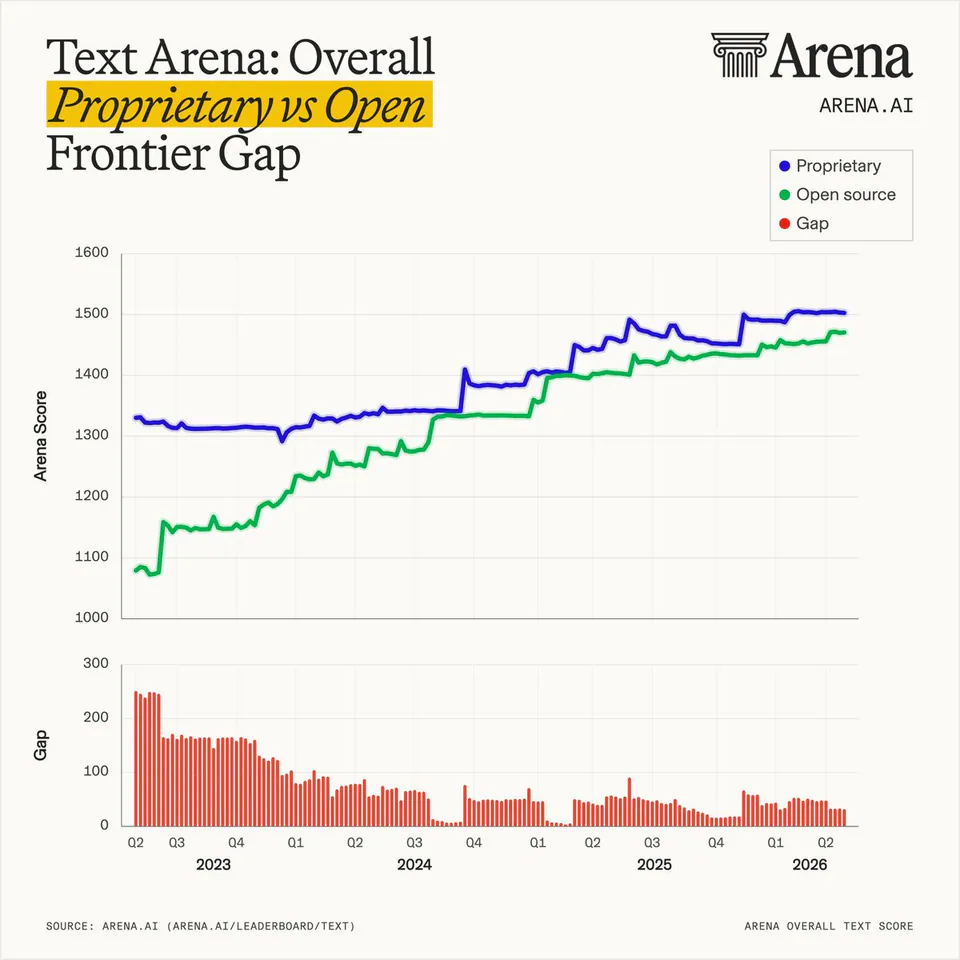
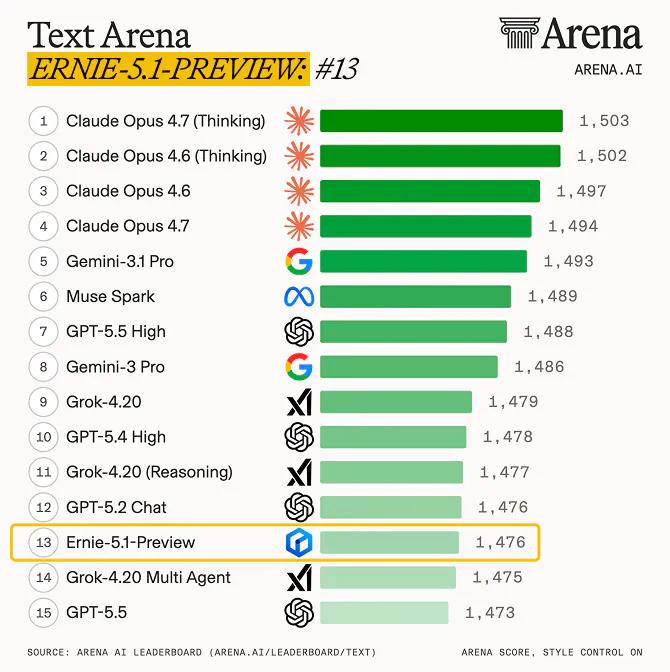
Arena.ai's latest Text Arena data reveals that the performance gap between top US and Chinese AI models has shrunk from 278 to just 29 Elo points in three years. This real-world evidence confirms that Chinese labs have reached near-parity with frontier US systems despite hardware restrictions.
Arena.ai, a community-driven platform for blind AI model evaluation, found that the performance gap between top US and Chinese AI models has effectively collapsed. Three years ago, the US lead stood at 278 Elo points; today, that lead is just 29 points. Elo (a statistical ranking system for relative skill) tracks these shifts.
- US-China Elo gap (2023)
- +278 points
- US-China Elo gap (2026)
- +29 points
- Stanford AI Index gap estimate
- 2.7%
- Top-ranked US model
- Claude Opus 4.6 Thinking
- Top-ranked Chinese model
- Ernie 5.1
- Total evaluation votes
- 6,225,144
This shift validates findings from the Stanford 2026 AI Index which estimated the performance divide at only 2.7 percent. The current leaderboard extends Anthropic's Claude Opus 4.6 Thinking at the top, while matching Baidu's Ernie 5.1 as a near-equal competitor from China.
These findings imply that the era of absolute US dominance is ending as global parity becomes the new baseline. This trend follows a pattern seen in Anthropic's rising business market share, which Arena leaderboards predicted months in advance. For global applications, top-tier Chinese models are now viable, high-performance alternatives.