Anthropic's fourth Economic Index report analyzes 2M conversations to track AI's workforce impact. Complex work benefits most - college-degree tasks see 12x speedups - but accounting for task reliability revises the projected US productivity boost down from 1.8 to 1.0-1.2 percentage points per year.
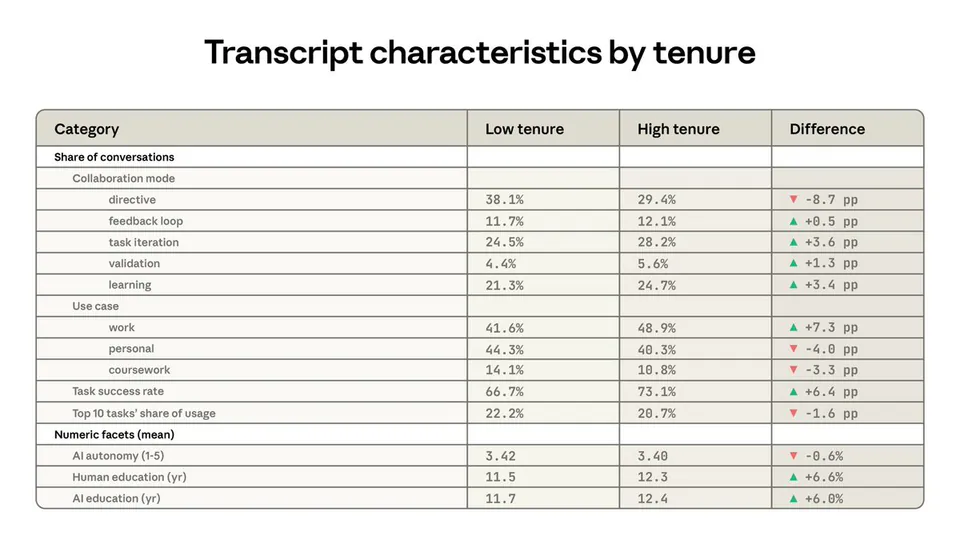
Anthropic published their fourth Economic Index report, analyzing 2M conversations to track AI's workforce impact. The headline: complex work benefits most - college-degree tasks see 12x speedups versus 9x for high school tasks. 49% of jobs now have at least a quarter of tasks coverable by Claude, up from 36% in January 2025.
The nuance is in the adjustments. When weighted by success rate and time spent, the projected US productivity boost drops from 1.8 to 1.0-1.2 percentage points annually. Augmentation (52%) has overtaken automation (45%) as the dominant pattern. Claude preferentially covers higher-education tasks, raising deskilling concerns in professions like technical writing and travel agencies.
The revised estimate would still return US labor productivity growth to late-1990s rates. Lower-income countries predominantly use Claude for education; higher-income countries for work.