Reve 2.0 Introduces Layout Based Generation for Precise 4K Image Control

ReveReve

· Updated

Reve released Reve 2.0, a 4K image model that uses structured layouts instead of text prompts to define visual elements. By treating images as addressable code, the system eliminates the ambiguity of natural language to provide pixel-perfect control over object placement and attributes.

Reve has launched Reve 2.0, a 4K image model built on a layout-based architecture. Instead of interpreting text prompts, the system uses a model (trained for spatial reasoning) derived from Qwen to represent images as structured, addressable code. Every element has a defined location and size, allowing for precise control.
Model
Reve 2.0
Resolution
4K
Architecture
Layout-based (Qwen-derived)
Editing
Addressable, element-level
Leaderboard Rank
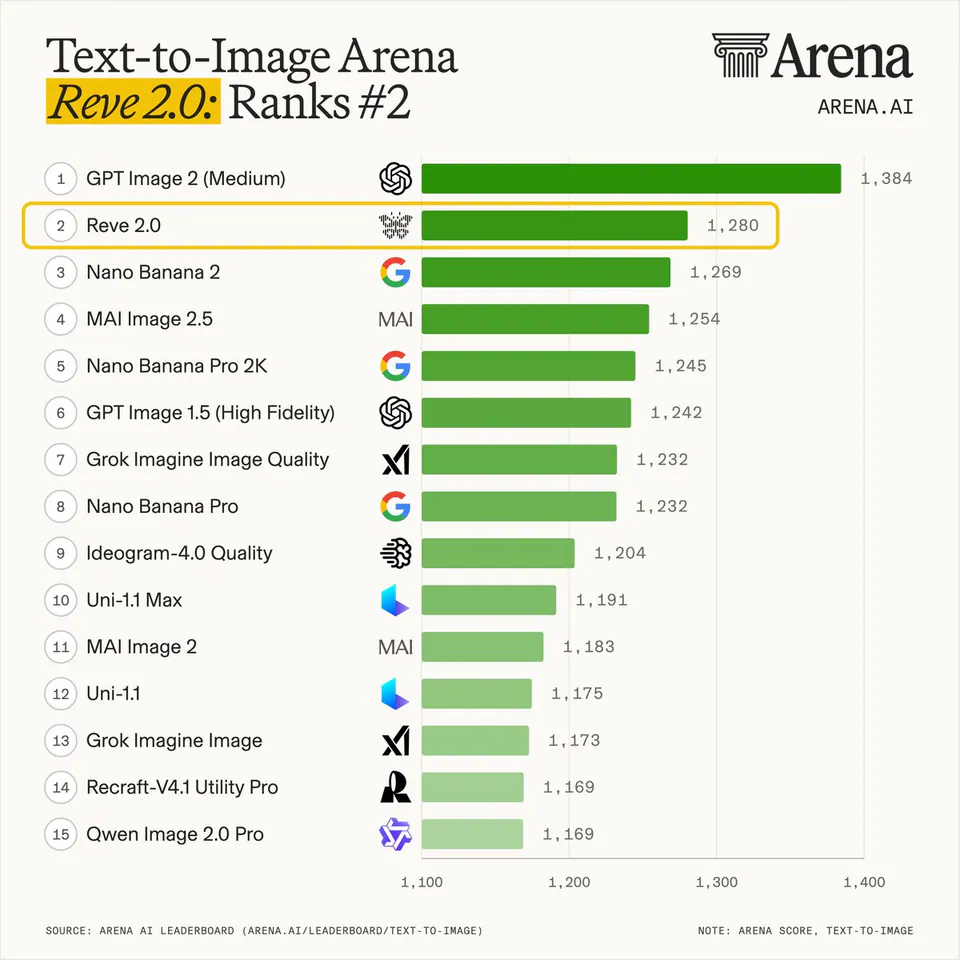
Top 2 (Arena Text-to-Image)

This update addresses the ambiguity of text-to-image prompting, where minor wording changes cause unpredictable shifts. By adopting a layout-first approach, Reve positions image generation as program synthesis, representing images as editable code rather than opaque pixels. The model ranks in the top two on the Arena Text-to-Image leaderboard, ahead of Nano Banana.

Users can refine results by writing natural-language instructions or by directly editing the layout structure. The addressable output enables targeted edits, such as moving an object without altering the background, mirroring the edit consistency of Aleph 2.0. Reve 2.0 is available now via the web interface, with an API launching in about a week.


Reve
Reve
@reve
X

Today, we’re launching Reve 2.0, the best 4K image model in the world. We invented a new way to generate and edit any image using precise layouts. For the first time, it’s possible to create images you can touch. https://t.co/mdj2xDEqfp

487retweets5.2klikes
View on X

Still wondering? A few quick answers below.

Reve 2.0 is a 4K image generation and editing model developed by the Reve research lab. It introduces a layout-based architecture that treats images as structured code rather than just pixel grids. This allows users to have precise, addressable control over every element within a visual, from object placement to specific attributes.

Layout-based generation uses a structured description where every element has a defined location, size, and local description. Unlike text prompts that can be ambiguous, these layouts act as a backbone for the image. The model uses spatial reasoning to render pixels based on this layout, ensuring that specific instructions are followed accurately.

The Reve 2.0 API is scheduled to launch in approximately one week following the initial product release. This will allow developers to integrate the model's layout-based generation and editing capabilities into their own applications. Currently, the model is accessible through the official Reve web interface for immediate testing and image creation.

Every HeadsUpAI update is written based on its original source and reviewed before it's published. Read our editorial standards →

Share this update