Tibo
@thsottiaux
/goal might be the most consequential thing we have shipped in codex The value of good instructions has never been higher.
185retweets4.9klikes
View on X OpenAI
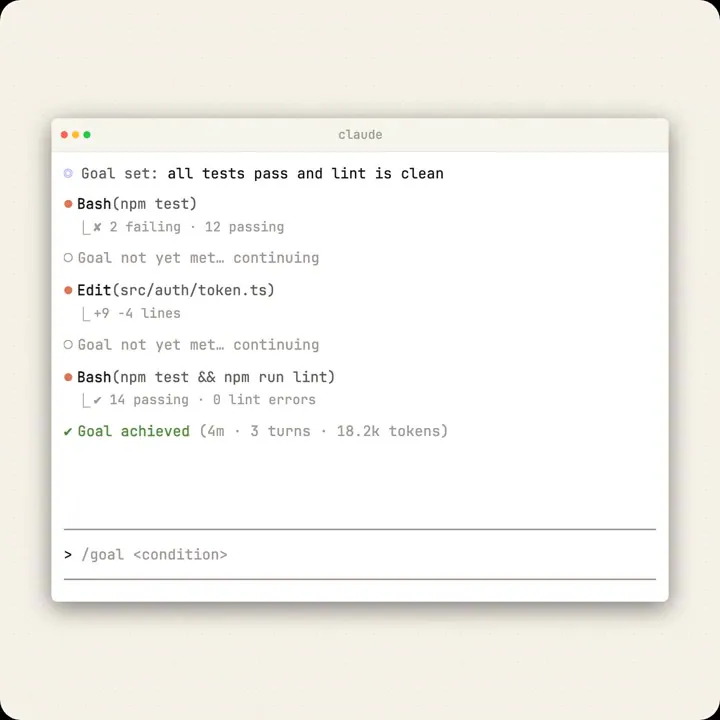
OpenAI released the /goal command for its Codex agentic coding platform, enabling users to define high-level objectives that the AI pursues autonomously. This update shifts the developer's role from issuing iterative prompts to providing strategic instructions for long-horizon tasks that can span multiple files and days.
/goal command for Codex, a terminal-based agentic coding tool that autonomously executes multi-step tasks. This feature introduces a long-horizon mode where the AI enters an autonomous agent loop (an iterative cycle of reasoning and action) to achieve objectives without constant human intervention.This update follows plans to provide Codex's long-running workflow controls that operate for days on complex problems. By moving beyond single-turn interactions, OpenAI is positioning natural language instructions as the primary substrate for Karpathy's agentic engineering framework (building reliable autonomous systems), shifting the development bottleneck from writing code to defining success criteria.
You can now invoke /goal followed by an objective, such as implementing a backlog or refactoring a module while maintaining test coverage. The command is available in the Codex CLI, which recently added Codex's background computer use to manage the software development lifecycle across multiple applications.
/goal might be the most consequential thing we have shipped in codex The value of good instructions has never been higher.
Still wondering? A few quick answers below.
Every HeadsUpAI update is written based on its original source and reviewed before it's published. Read our editorial standards →