n8n Guide: Architect AI Agents for Production Reliability

n8nn8n

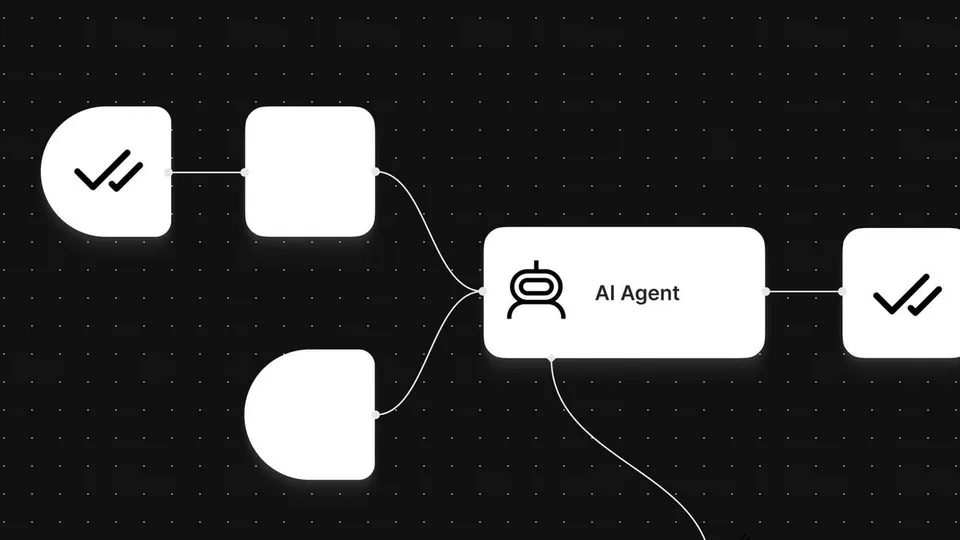
n8n has released a new guide on selecting the right AI agent architecture patterns, emphasizing that most agent failures stem from architectural issues rather than model performance. The guide details behavioral patterns, which define how an individual agent thinks, and topological patterns, which determine how multiple agents coordinate within a system.

This focus on architecture is critical as AI agents move from prototypes to production, where stability and fault tolerance are paramount. The guide helps address systemic failures that go beyond prompt engineering, aligning with n8n's broader Production AI Playbook for building dependable AI workflows. It highlights how design choices act as safeguards against issues like hallucinated parameters or reasoning loops.
Behavioral Patterns
Tool Use, ReAct, Reflection, Planning
Topological Patterns
Orchestrator-Executor, Sequential Chain, Parallel Fan-Out/Fan-In, Hierarchical, P2P Mesh
Operational Guardrails
Context/memory management, error handling, scalability, security
n8n Native Support
Tool Use, ReAct, Orchestrator-Executor, Sequential Chain, Parallel Fan-Out/Fan-In
Common Failure Modes
Hallucinated parameters, reasoning loops, orchestrator overload, error propagation

The guide helps teams select patterns based on task complexity, cost, and latency, and outlines operational guardrails for production systems. These include context and memory management, robust error handling, scalability optimizations, and security controls. n8n's platform supports implementing these patterns and guardrails using features like memory nodes, retry logic, and human-in-the-loop (HITL) approval.

Teams can use this guide to select patterns based on task complexity and implement operational guardrails directly within n8n. This includes using memory nodes for state management, retry logic for error recovery, and human-in-the-loop nodes for high-risk actions. These features allow for building resilient agentic systems that scale beyond simple conversational demos.

n8n.io
n8n.io
@n8n_io
X

Most agent failures aren't model failures. They're architecture failures. New guide on picking the right pattern. https://t.co/N7x8CMOqVO

1retweets12likes
View on X

Still wondering? A few quick answers below.

AI agent architecture patterns are design choices that define how an individual AI agent thinks and reasons (behavioral patterns) and how multiple agents coordinate within a larger system (topological patterns). They are crucial for building stable and scalable AI agent systems.

These patterns are important because most AI agent failures in production environments are due to architectural flaws, not just issues with the underlying AI model. Choosing the correct pattern helps ensure stability, fault tolerance, and scalability under real-world conditions.

The guide recommends operational guardrails such as robust context and memory management, comprehensive error handling and recovery mechanisms, strategies for scalability and performance optimization, and strict security and access control measures to prevent systemic risks.

n8n natively supports behavioral patterns like Tool Use and ReAct, and topological patterns such as Orchestrator-Executor, Sequential Chain, and Parallel Fan-Out/Fan-In. Its visual workflow capabilities allow users to combine these patterns and implement operational guardrails like memory nodes, retry logic, and human-in-the-loop approvals.

Every HeadsUpAI update is written based on its original source and reviewed before it's published. Read our editorial standards →

Share this update