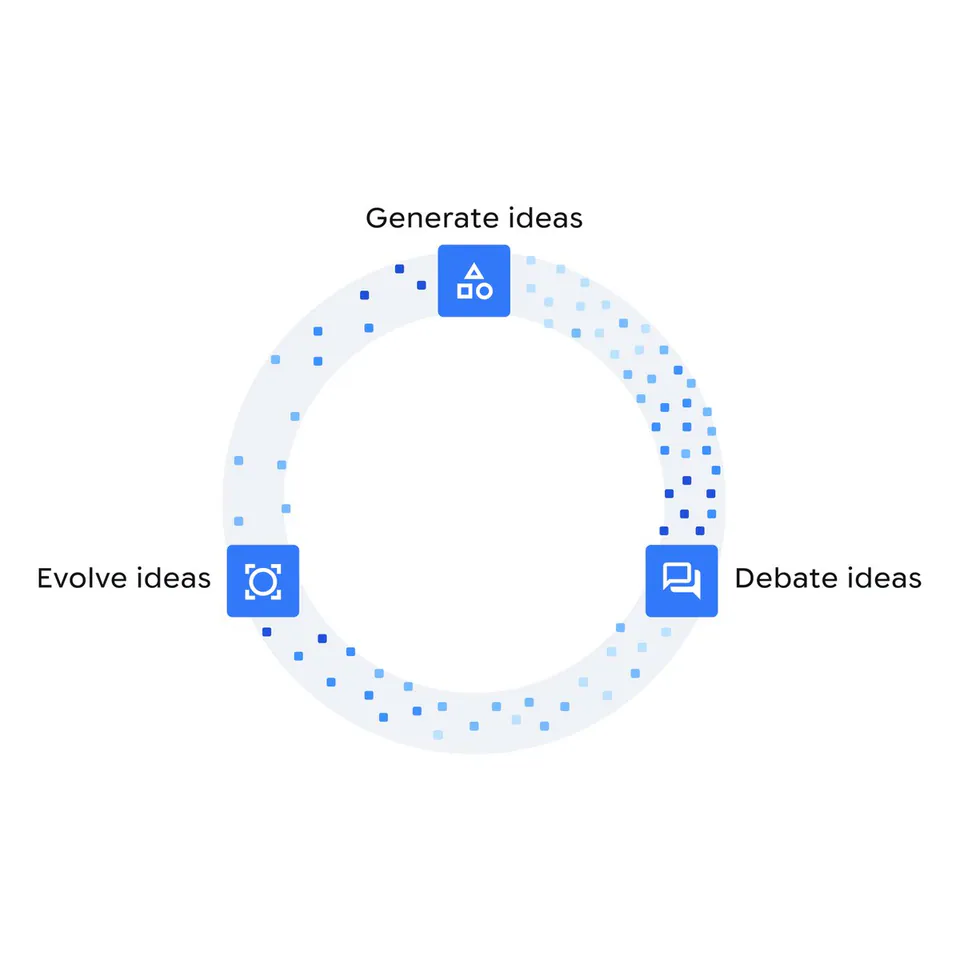
Harvard researchers released AutoScientists, a decentralized multi-agent framework that allows AI agents to self-organize into research teams for autonomous scientific experimentation. By replacing central planners with a shared experimental state and discussion forum, the system enables agents to pursue competing hypotheses and reorganize when research directions stagnate.
Harvard researchers released AutoScientists, an open-source framework for decentralized AI agent teams designed for long-running scientific discovery. Unlike systems following a single research trajectory, it deploys specialized Analyst and Experiment agents that coordinate through a shared state—a central repository of logs and dead-end registries—to explore multiple hypotheses in parallel.
- BioML-Bench performance
- 74.4% mean leaderboard percentile
- GPT optimization speedup
- 1.9x faster than autoresearch
- ProteinGym improvement
- +12.5% Spearman correlation
- Biomedical tasks evaluated
- 24 tasks
- Availability
- Open-source GitHub repository
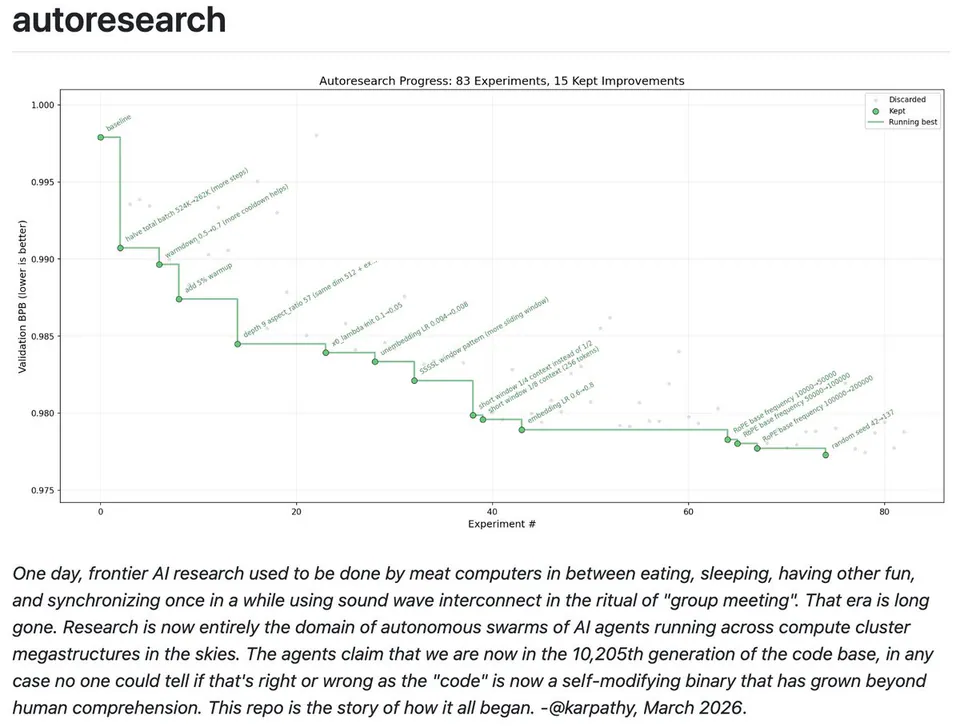
This decentralized approach addresses the local optima problem where single-agent loops—exemplified by Andrej Karpathy's autoresearch launch—often plateau. By allowing agents to critique each other and share failed results, the system mimics human scientific discovery, outperforming prior agents by 8.3% on biomedical benchmarks and optimizing GPT training 1.9x faster.
You can use the framework to automate research in drug discovery, protein engineering, and ML optimization. The project is open science, with the research paper and code available for deployment. It provides a blueprint for building resilient multi-agent systems that sustain autonomous experimentation over extended periods without human intervention.