HeadsUpAI

Google Tests Offline Gemma 4 App for Multimodal Reasoning on Pixel Hardware

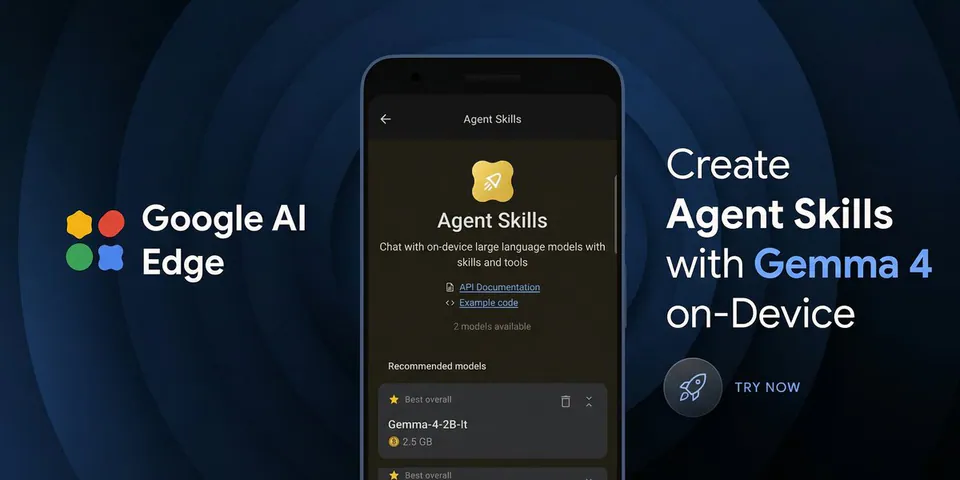
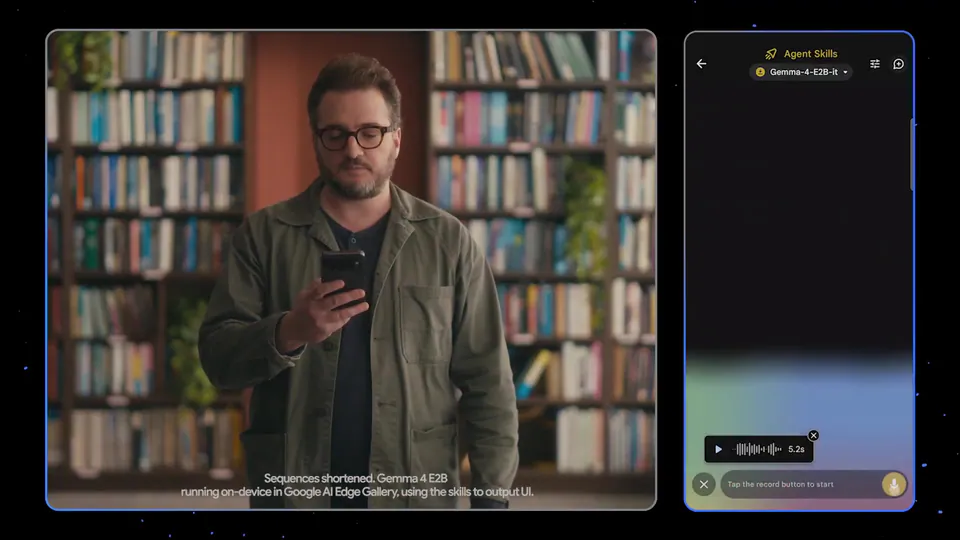
Google field-tested an experimental Gemma 4 application in a remote environment with zero cellular or Wi-Fi connectivity. The app runs 100% offline on Pixel hardware, leveraging the Gemma 4 model family for visual understanding and tool use. This setup pairs the on-device model with prototype display glasses to process visual inputs.
Connectivity
100% offline
Hardware
Pixel phone, prototype display glasses
Capabilities
Visual understanding, math reasoning, tool use
Model
Gemma 4
Status
Experimental prototype

This test validates the shift toward local-first AI agents that don't rely on expensive cloud APIs. While previous updates introduced Gemma 4 drafter models to speed up local inference (running a model to generate outputs), this demonstration shows these components working together in a disconnected, wearable form factor.

While the app and glasses remain internal prototypes, you can build similar offline workflows using the Gemma 4 31B model which supports autonomous tool use. These models are available under an open-weight license, allowing developers to integrate multimodal reasoning directly into mobile or edge-based applications.

Google Gemma
Google Gemma
@googlegemma
X

Last week we went out into the wilderness, far from any cell service or Wi-Fi, to test an experimental Gemma 4 app, all 100% offline: 🔍Visual understanding 🧠Math reasoning 🛠️Tool use and more Running seamlessly on Pixel hardware and paired with our prototype display glasses. https://t.co/y0D2ZIG0PJ

13retweets178likes
View on X

Still wondering? A few quick answers below.

The experimental Gemma 4 application is a mobile tool designed to run entirely on-device without any cellular service or Wi-Fi connectivity. It uses Google's open-weight Gemma 4 models to perform complex tasks like visual understanding, mathematical reasoning, and tool use locally on a user's hardware rather than relying on cloud-based processing.

The application runs seamlessly on Google Pixel smartphone hardware and is integrated with prototype display glasses. This setup allows the AI model to process visual information from the wearable glasses and execute reasoning tasks or tool commands directly on the phone's processor, ensuring all data remains private and accessible in remote environments.

Yes, the application is specifically designed to handle multimodal tasks including visual understanding and math reasoning. During field testing in the wilderness, the system demonstrated it could see and interpret its surroundings through prototype glasses and solve mathematical problems using the local computing power of a Pixel device without any external data connection.

The specific application and display glasses used in the wilderness test are currently internal Google prototypes and have not been released for public use. However, the underlying Gemma 4 models used to power the app are part of Google's open-weight model family, which developers can access to build their own local AI applications.

Share this update