HeadsUpAI

Google Gemma 4 E4B Drives iOS Simulator for Local On-Device Automation

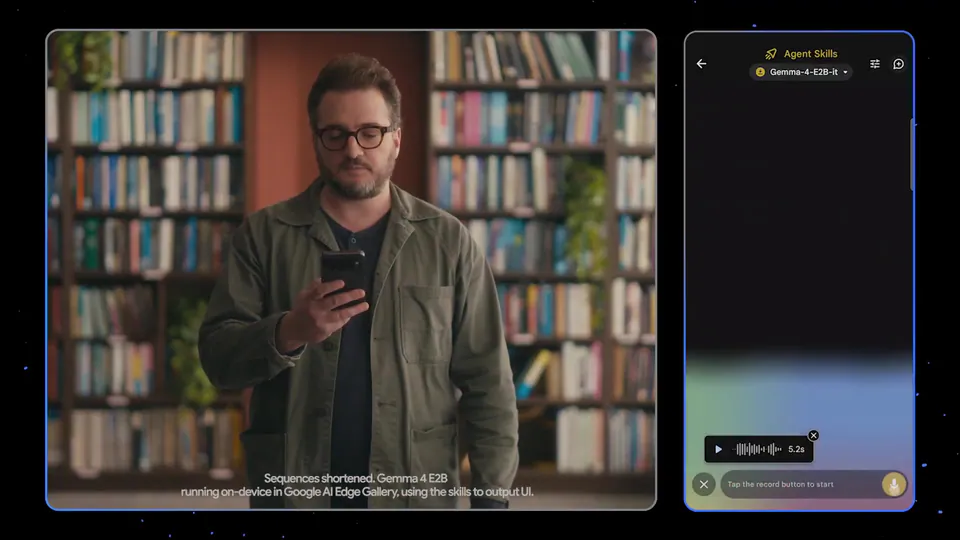
Google demonstrated Gemma 4 E4B performing autonomous on-device automation by driving an iOS simulator directly. Using a framework called Argent, the lightweight model navigates mobile software interfaces and handles complex interactions without human direction. This follows the Gemma 4 launch, which brought frontier-level reasoning to consumer hardware.

Most computer use currently relies on massive cloud models due to the high reasoning requirements of UI navigation. By proving a small, edge-optimized model can manage these tasks, Google is lowering the barrier for private, low-latency automation. It mirrors the Gemma 4 31B autonomous debugging capabilities but targets mobile environments.

You can now explore local agentic workflows that interact with mobile applications without sending screen data to external servers. This capability is particularly relevant for automated testing and personalized mobile assistants that require high data sovereignty. The Gemma 4 family remains available under an open-weight license for local use.

Google Gemma
Google Gemma
@googlegemma
X

We are entering a new era of on-device automation. ✨ Watch Gemma 4 E4B navigate and drive an iOS simulator directly using Argent. Local models can handle complex interactions and software navigation autonomously. https://t.co/xuXqx3flOD

430retweets4.8klikes
View on X

Still wondering? A few quick answers below.

Gemma 4 E4B is a lightweight, open-weight AI model developed by Google DeepMind. It is part of the Gemma 4 family, which is built on the same architecture as Google's Gemini models. This specific version is optimized for high-performance reasoning on local devices and consumer hardware rather than relying on cloud-based infrastructure.

The model uses a framework called Argent to navigate and drive an iOS simulator directly. This capability, known as computer use, allows the AI to interact with graphical user interfaces by clicking, typing, and navigating applications autonomously. It processes complex software interactions locally on the device to complete multi-step tasks without human intervention.

Yes, Gemma 4 E4B is an open-weight model, meaning its trained parameters are publicly released for developers to download and run on their own hardware. This allows for private, offline agentic workflows where data sovereignty is a priority, as the model does not need to send screen information or data to external servers.

Argent is the automation framework that enables Gemma 4 models to interact directly with software environments like an iOS simulator. It serves as the bridge between the AI model's reasoning and the computer's interface, allowing the model to execute actions and navigate software autonomously as part of an on-device automation loop.

Share this update