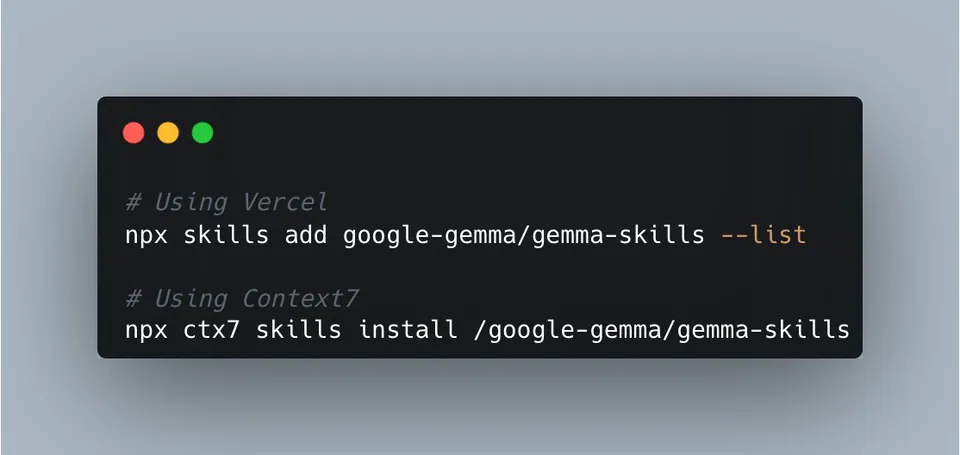
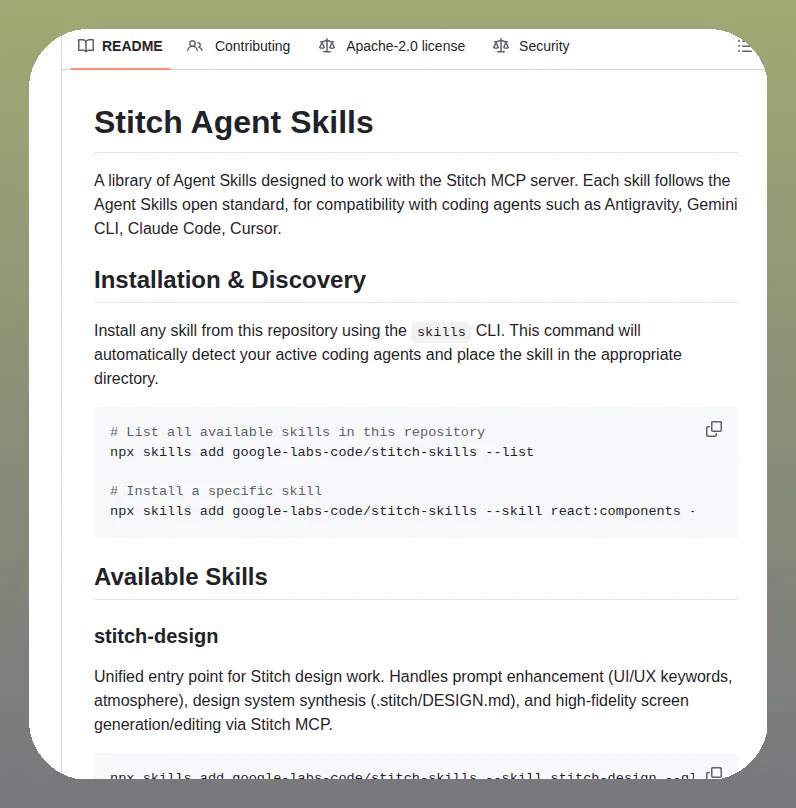
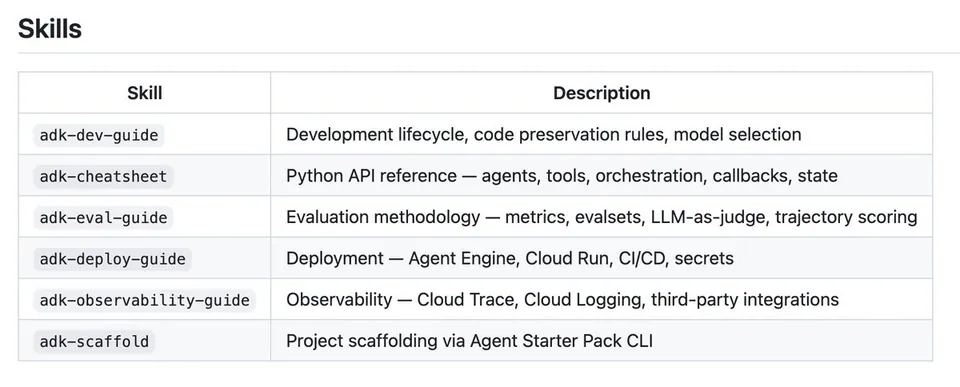
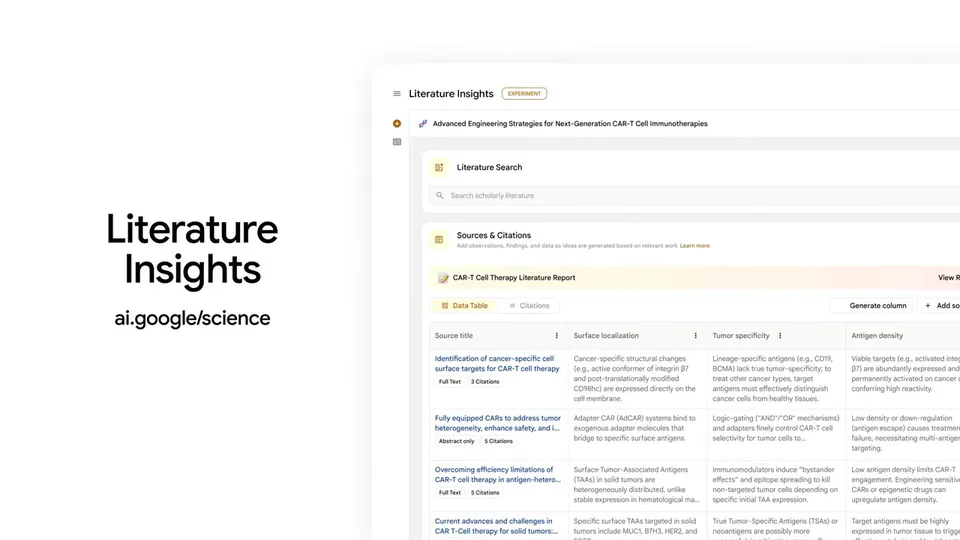
How can you accelerate your day to day research workflow? By giving AI the right scientific toolkit. We launched Science Skills for Google @Antigravity, integrating insights from over 30 major life science sources, including UniProt and the AlphaFold Database.
Google DeepMind Launches Science Skills to Accelerate Life Science Research
Google DeepMind launched Science Skills for Antigravity, a toolkit integrating data from over 30 major life science sources. This update connects the Antigravity 2.0's new orchestrator to foundational biological databases like UniProt and the AlphaFold Database, allowing AI agents to reason across vast genomic and proteomic datasets.
- Integrated sources
- 30+ life science databases
- Primary databases
- UniProt, AlphaFold Database, and others
- Platform
- Google Antigravity
- Core capability
- Structural analysis and genomic research
- Research focus
- AK2 mutation analysis and disease mechanisms
This launch moves AI from a general-purpose assistant to a verticalized research partner. By embedding domain-specific knowledge into an autonomous framework, similar to K-Dense's Scientific Agent Skills integration, Google is addressing the knowledge layer that previously limited agents to literature reviews rather than active computational modeling.
You can now use these skills within the Antigravity environment to automate complex research tasks like analyzing genetic mutations. In early tests, teams used the system to identify novel insights into rare diseases faster than traditional methods. These capabilities are available through the Gemini for Science suite.
Google DeepMind
@GoogleDeepMind
32retweets188likes
View on XStill wondering? A few quick answers below.
Science Skills are a specialized toolkit for the Antigravity agent ecosystem designed to accelerate life science research. They integrate data and insights from over 30 major biological sources, including UniProt and the AlphaFold Database. This allows AI agents to perform complex structural and genomic analyses that previously required manual effort and multiple disconnected tools.
The toolkit integrates insights from more than 30 major life science sources. Key databases mentioned include UniProt, which provides protein sequence and functional information, and the AlphaFold Database, which contains predicted protein structures. These integrations allow AI agents to access and reason across foundational biological data directly within their research workflows.
Researchers can use these skills to automate and accelerate complex workflows like analyzing rare genetic diseases. In real-world tests, Google DeepMind used the toolkit to study AK2 mutations, performing structural analysis much faster than traditional methods. This capability helps scientists move from data collection to novel insights about disease mechanisms with significantly less manual overhead.
The Science Skills toolkit is currently integrated into the Google Antigravity platform. While the announcement highlights its use in real-world research puzzles by DeepMind teams, access is primarily directed through the Antigravity ecosystem and the Gemini for Science suite. Users interested in these capabilities can find more information on the official Antigravity use-case page for science.
Unlike standard conversational AI, Science Skills provide agents with a specialized knowledge layer and direct access to scientific databases. This allows the system to perform multi-step structural analysis and data synthesis rather than just answering questions. By verticalizing the AI for science, it can surface novel insights and handle high-stakes computational modeling tasks autonomously.