HeadsUpAI

Google DeepMind Launches Gemini for Science to Accelerate Research Breakthroughs

Google DeepMind launched Gemini for Science, a suite of experimental tools in Google Labs designed to assist researchers. The suite includes Literature Insights for analyzing papers via NotebookLM, Hypothesis Generation for brainstorming via Co-Scientist, and Computational Discovery for testing modeling approaches through AlphaEvolve agentic coding.

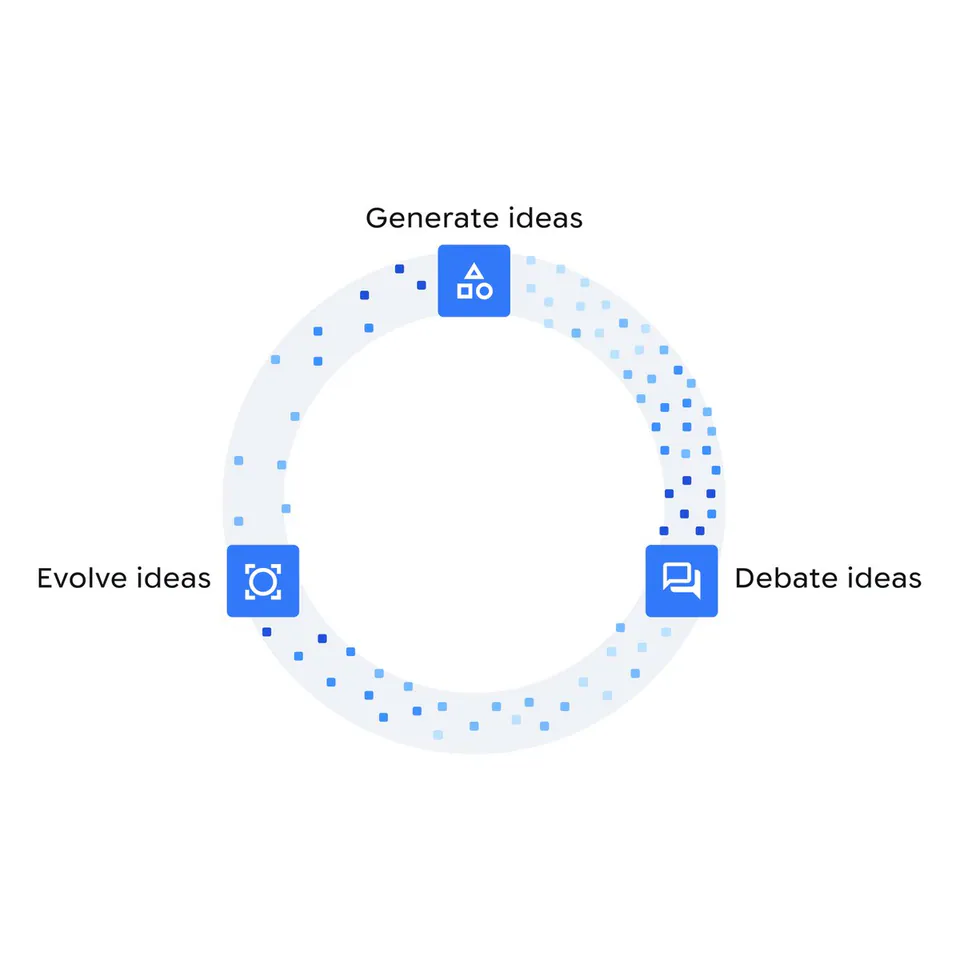
This release signals a shift toward vertical AI where models operate in autonomous loops. By using a multi-agent system to run "idea tournaments," Google is applying Google's agentic engineering principles to the complex domain of scientific research. These systems generate, debate, and evaluate hypotheses to identify viable research paths.

You can access these prototypes through Google Labs to automate literature reviews or test code variations. These tools leverage the Gemini Enterprise Agent Platform infrastructure designed for long-running autonomous tasks, following the launch of managed agents for the Gemini API to lower the technical barrier for deploying production-grade scientific assistants.

Google DeepMind
Google DeepMind
@GoogleDeepMind
X

We want to help scientists discover their next breakthrough with AI. Gemini for Science is our new suite of experimental tools to help them explore more hypotheses, validate work at scale, unpack literature with ease, and more 🧵

247retweets1.4klikes
View on X

Still wondering? A few quick answers below.

Gemini for Science is a new suite of experimental AI tools from Google DeepMind designed to assist the scientific community. The suite focuses on helping researchers explore more hypotheses, validate their work at scale, and analyze scientific literature more efficiently by using specialized AI agents to handle complex research tasks.

The hypothesis generation tool uses a system called Co-Scientist to brainstorm and evaluate research ideas for open challenges. It operates through a multi-agent tournament where different AI agents generate, debate, and evaluate various hypotheses. This collaborative process helps researchers identify which ideas are viable and understand the reasoning behind their success or failure.

Literature Insights is a tool built with NotebookLM that helps scientists organize and unpack research papers. It can search through scientific literature, organize findings into structured tables, and allow researchers to chat with curated data. This enables the rapid creation of research outputs like slide decks and audio overviews in minutes.

Computational Discovery is an agentic prototype built with AlphaEvolve and Empirical Research Assistance. It is designed to develop and score thousands of code variations in parallel. This capability allows scientists to test new modeling approaches for complex fields, such as epidemiology, in a fraction of the time typically required for manual testing.

Google DeepMind is currently rolling out these three experimental tools through Google Labs. They are intended for scientists and researchers who want to discover new research directions using AI. Because these are experimental prototypes, they are being used to help validate work and explore hypotheses in a controlled research environment.

Share this update