HeadsUpAI

Google Rebuilds Gemini Interactions API to Power Multi-Step Agentic Workflows

· Updated

Google is introducing breaking changes to the Gemini Interactions API to support complex agentic workflows. The update replaces role-based outputs with a steps array, where every action—including internal reasoning, tool calls, and search results—is represented as a discrete, typed step in a timeline.

This shift moves Gemini from a conversational paradigm to a native agentic framework. Modeling interactions as a sequence of actions rather than a back-and-forth chat gives developers granular visibility into the model's process. This mirrors OpenAI's Responses API and simplifies the Gemini tool orchestration required for long-running tasks.

You must migrate before the legacy API is removed on June 8, 2026. The update consolidates output controls into a single response_format field, removing separate MIME type declarations. Developers using the latest SDKs are opted in automatically, while REST users can test the new schema using a revision header.

Google AI Studio
Google AI Studio
@GoogleAIStudio
X

we’re evolving the gemini interactions api to support rich, multi-step agentic workflows instead of strict "user" and "model" roles, every action (from thinking to tool calls) is now represented as its own step https://t.co/SJ6aww6EMb

41retweets413likes
View on X
Still wondering? A few quick answers below.

The steps schema is a new response structure that replaces the flat outputs array with a structured timeline of execution steps. Each step is typed, allowing developers to track specific actions like model thinking, function calls, and search results. This change supports complex agentic workflows by providing granular visibility into the model's multi-step reasoning and tool execution process.

Google will permanently remove the legacy Interactions API schema on June 8, 2026. Before this date, the new schema becomes the default for all requests on May 26, 2026. Developers can manually opt in starting May 7 by using a specific API revision header or by upgrading to the latest versions of the Python and JavaScript SDKs.

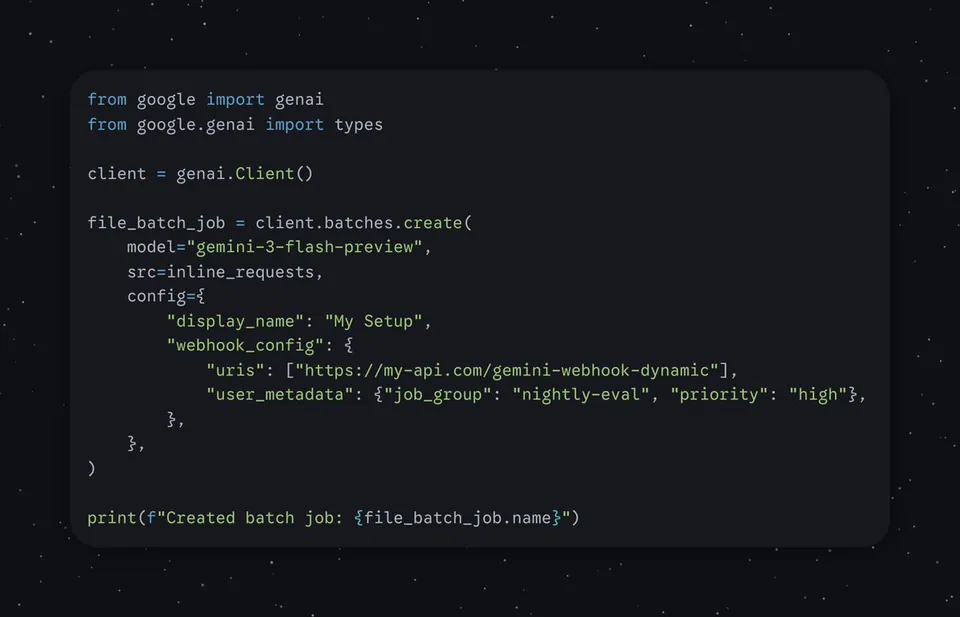
To migrate, you must update your code to read response content from the steps array instead of the legacy outputs array. You should also update your logic to handle new step types like user input and model output. If you use the REST API, add the Api-Revision: 2026-05-20 header to your requests to opt in before the default change.

The updated API introduces several new Server-Sent Event types for streaming, including interaction.created, step.start, step.delta, and step.stop. These replace legacy events like content.delta and interaction.start. The new events provide more precise tracking of the interaction lifecycle, allowing clients to handle partial JSON deltas for function calls and monitor the progress of individual execution steps.

Google consolidated all output format controls into a single, polymorphic response format field, removing the legacy response mime type. You now specify the MIME type and associated JSON schemas or image configurations directly within this object. This change centralizes settings and allows for requesting multiple output modalities, such as text and images, in a single call.

Share this update