Introducing multi-agent orchestration in Oz, with support for Claude Code, Codex and the Warp Agent. Use /orchestrate to delegate complex tasks across a team of agents, locally or in the cloud. https://t.co/sUmzLWjLWT
Warp Launches Multi Agent Orchestration and Cloud Handoff in Oz
Warp, an agentic development environment (ADE) combining a terminal and code editor, launched multi-agent orchestration in Oz, its cloud-based agent control plane. The update introduces the
/orchestrate command to coordinate tasks across a swarm of coding agents including Claude Code, Codex, and the native Warp Agent.- Supported agents
- Claude Code, Codex, Warp Agent
- Orchestration command
- /orchestrate
- Cloud handoff operator
- &
- Self-hosting options
- Kubernetes, Docker
- Infrastructure
- Managed cloud or VPC
This shift addresses the limitations of local terminal sessions for long-running autonomous tasks. Moving the agentic loop to the cloud prevents workflows from stalling when a machine goes offline. This follows the launch of Warp's agentic development environment and Warp's open-source agent skills.
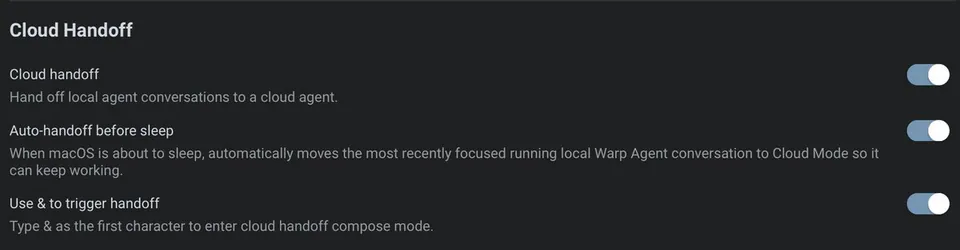
You can now use the & operator to hand off terminal conversations to the Oz cloud for overnight execution. The platform also added enterprise features like per-team billing and granular permissions, with self-hosting support for Docker and Kubernetes. Oz is available now for teams managing multi-repo changes via managed or private cloud.
Warp
@warpdotdev
15retweets99likes
View on XStill wondering? A few quick answers below.
Oz is a cloud-based orchestration platform designed to manage and scale AI coding agents. It acts as a persistent control plane that allows developers to run autonomous agents in the cloud rather than just locally. This setup enables agents to perform multi-repo changes and long-running tasks that continue even after a user closes their terminal.
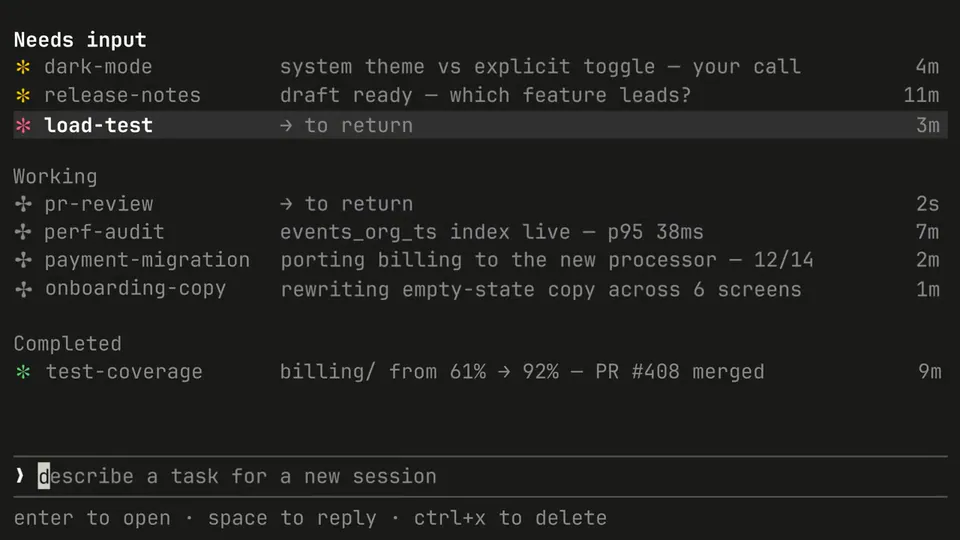
Developers can use the orchestrate command within the Warp environment to delegate complex software tasks across a team of specialized agents. The system currently supports coordination between Claude Code, Codex, and Warp's own native agent. This allows multiple agents to work together on a shared goal, such as refactoring code across different repositories or managing full-stack updates.
The handoff feature allows users to move an active agent conversation from their local terminal to the Oz cloud using the ampersand operator. This ensures that autonomous workflows, such as large-scale migrations or testing suites, can run persistently in a managed environment. Developers can pick up the session locally the next morning after the cloud agent completes the work.
Warp provides flexible hosting for the Oz platform to meet different security and infrastructure needs. Teams can choose to use Warp-hosted managed Docker environments for a turnkey experience or opt for self-hosting. Supported self-hosting methods include deploying agents within a private cloud, a dedicated data center, or using Kubernetes pods and Docker containers on internal infrastructure.
The latest update introduces several features specifically for professional teams and large organizations. These include granular permissions for individual agents to control access, per-team billing for simplified cost management, and a unified dashboard for observability. These tools are designed to help enterprises deploy and monitor agent swarms across their entire engineering organization with better oversight.