OpenRouter published guidance showing how to use its Agent SDK's human-in-the-loop primitives to meet incoming AI regulations including the EU AI Act, Colorado's ADMT law, and NIST AI RMF. The guide documents existing SDK hooks that pause execution, persist state, and log human approvals so deployers can gate sensitive agent actions and produce audit trails required by these frameworks.
OpenRouter published guidance mapping its Agent SDK's existing human-in-the-loop (HITL) primitives to upcoming AI regulations. The SDK supports pausing agent execution, persisting conversation state, validating human responses, and resuming cleanly after review — the building blocks regulators require for human oversight of agent actions.
- Regulations Covered
- EU AI Act, Colorado ADMT law, NIST AI RMF
- EU AI Act Timeline
- High-risk obligations apply August 2026
- Relevant EU AI Act Articles
- Article 14 (oversight), Articles 12 & 9 (logging)
- SDK HITL Hooks
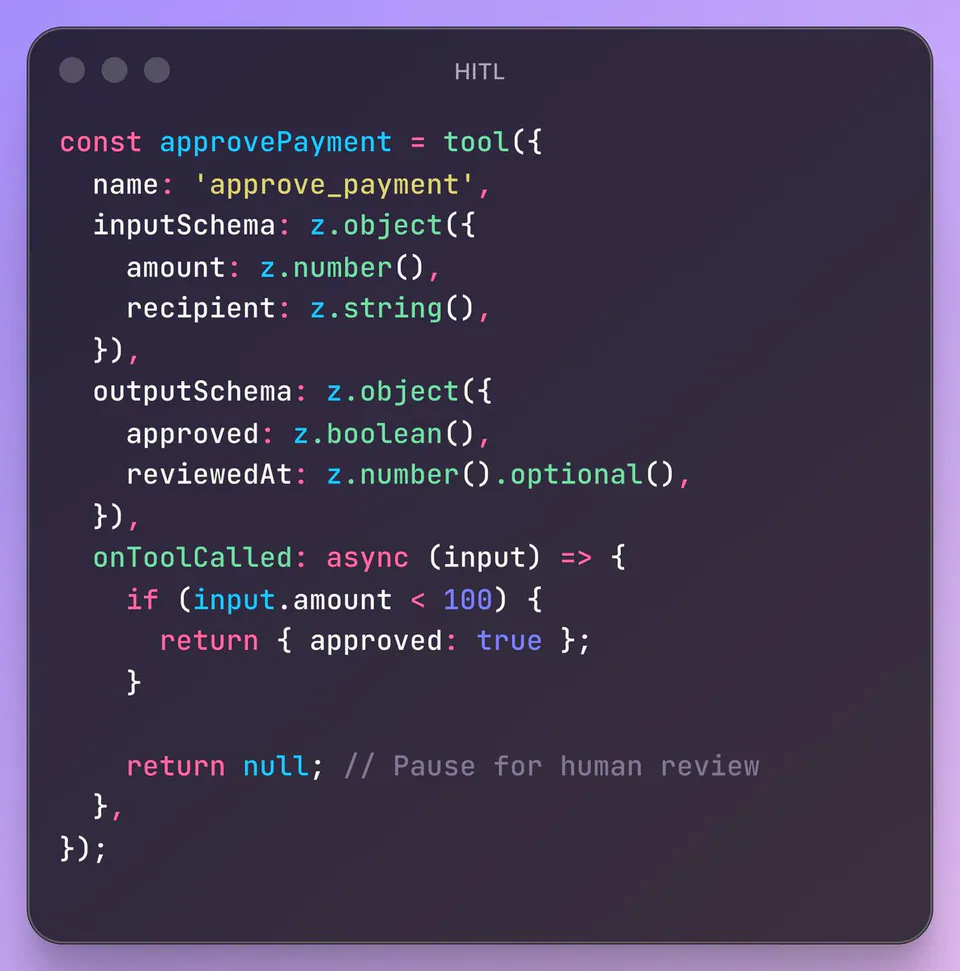
- onToolCalled, requireApproval, timeout escalation
As AI agents take on high-stakes tasks like financial transactions or healthcare decisions, regulations such as the EU AI Act (effective August 2026), Colorado's ADMT law (effective January 2027), and the NIST AI Risk Management Framework mandate human intervention and audit trails. OpenRouter's guide documents how deployers can classify tools by risk, gate sensitive actions, and log oversight events using SDK hooks already in place.
Developers can mark high-risk tools using onToolCalled and require approval via requireApproval hooks. The guide covers audit logging for oversight events and timeout-based escalation for unresponsive reviewers, applied through configuration in existing agent workflows.