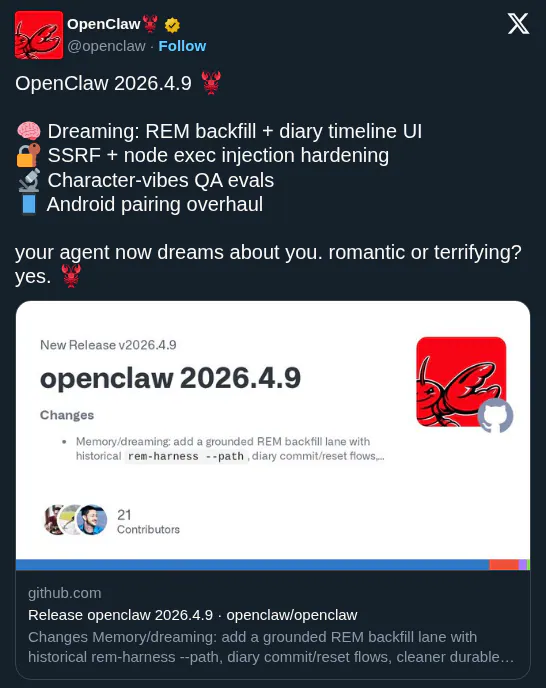
OpenClaw version 2026-4-5 introduces an experimental background memory consolidation system called Dreaming and native tools for generating video and music. This update shifts the open-source assistant toward autonomous long-term memory management while navigating new API restrictions from frontier model providers.
OpenClaw, an open-source self-hosted AI assistant, released version 2026-4-5 featuring an experimental memory system called Dreaming. This background process consolidates short-term signals into durable memory through three phases—Light, Deep, and REM—mimicking human sleep to improve long-term recall and reduce hallucinations (plausible but incorrect information).
This release marks a strategic pivot as frontier labs tighten ecosystem access; specifically, Anthropic subscriptions no longer cover third-party harnesses like OpenClaw. By optimizing prompt-cache (reusable model instructions) reuse and adding native support for GPT-5.4 and Qwen, the platform ensures performance stability and cost efficiency regardless of the model provider.
You can now use built-in tools for video and music generation via providers like Google Lyria, MiniMax, and Runway. The update is available as a free download on GitHub for macOS, Windows, and Linux. Existing users can run openclaw doctor --fix to migrate configurations and enable the new structured task progress UI.