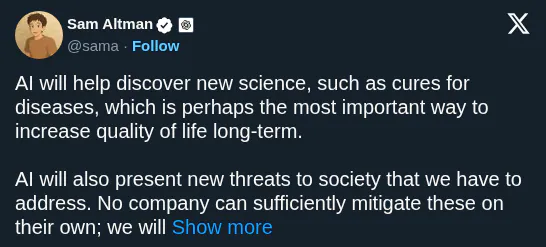
AI should dramatically increase quality of life and individual freedoms for people around the world. The OpenAI Foundation is making an initial $250M commitment to measurement, transition support, and new approaches to broadly shared prosperity. https://t.co/zOD8O94RjQ
OpenAI Foundation Commits $250M to Pilot New Post-AI Economic Systems
OpenAI committed an initial $250 million to its Economic Futures in the Age of AI program to fund pilots for post-AI economic systems. The initiative joins the OpenAI Foundation's one billion dollar commitment to global resilience, focusing on how value shifts from labor to capital as AI capabilities expand.
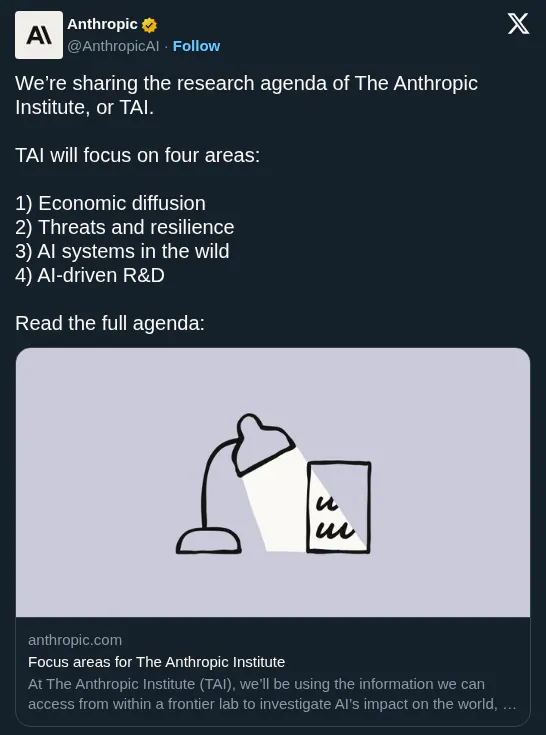
As AI makes expertise widely available, traditional metrics like GDP may fail to capture welfare if income flows through digital goods. This program aims to build measurement infrastructure and testable designs for sovereign wealth funds. The work follows a similar research agenda from the Anthropic Institute focused on labor disruption.
The foundation is inviting community input to inform its first initiatives, which will be announced later this year. You can expect funding for multi-agent economic simulations and pilots for wage loss insurance. The goal is to establish an independent ecosystem that makes economic security options real before they become urgent.
Sam Altman
@sama
140retweets2klikes
View on XStill wondering? A few quick answers below.
The Economic Futures program is a 250 million dollar initiative by the OpenAI Foundation designed to address the global economic shifts caused by AI. It focuses on three main areas: building new measurement infrastructure to track AI impact, supporting workers through near-term transitions, and piloting long-term institutional designs for broadly shared prosperity.
The foundation plans to fund concrete approaches that provide immediate support, such as expanded wage loss insurance and easier access to unemployment benefits. It is also investing in state capacity to help governments deliver public services more effectively using AI tools, specifically targeting people who are currently underserved by existing legal, financial, and healthcare systems.
The program is moving radical economic ideas into testable designs, including shifting taxation from labor toward capital and economic rents. Other explored models include sovereign wealth funds, windfall mechanisms, and adaptive fiscal systems where tax rates or dividends could automatically respond to indicators like concentrated gains, changes in labor share, or extraordinary returns.
OpenAI is investing in independent measurement and forecasting infrastructure to create a clearer picture of how value accrues between workers, firms, and capital owners. This includes building global labor market systems similar to the Bureau of Labor Statistics to track how tasks are bundled into jobs and whether automation creates or displaces human labor.
The foundation expects to announce its first specific initiatives and partnerships later this year. While the initial commitment is 250 million dollars, the foundation is currently building a dedicated team to advance this work directly and is actively seeking input from the public to identify which economic approaches and pilots are most needed.