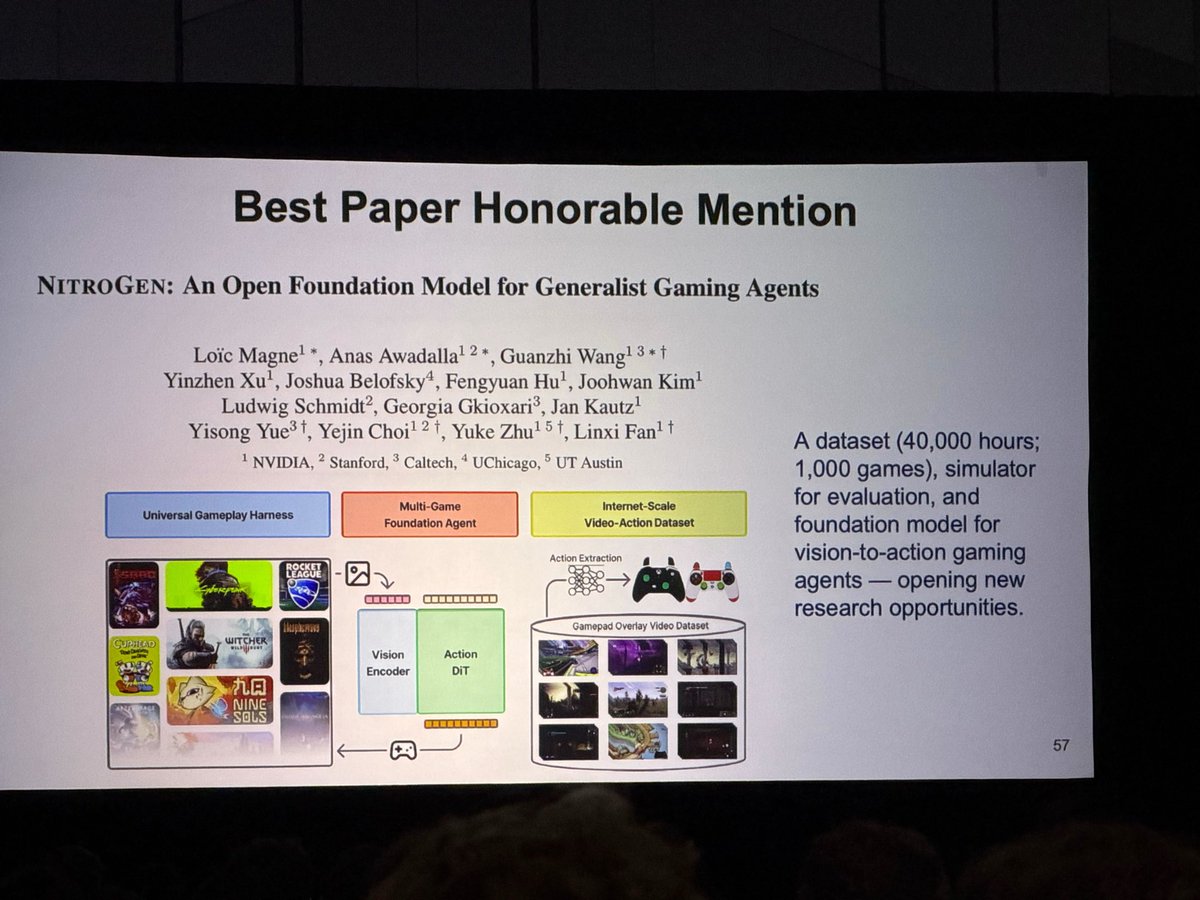
NVIDIA Research's PixelDiT, a single-stage image generation model, was selected as a best paper finalist at CVPR 2026. It removes the autoencoder step common in most image generation models, learning the diffusion process directly in pixel space to preserve fine details and achieve state-of-the-art performance among pixel-space generative models. This approach addresses a key limitation in image quality by eliminating a lossy compression step.
NVIDIA Research developed PixelDiT (Pixel Diffusion Transformers), an image generation model selected as a best paper finalist at CVPR 2026. It removes the pretrained autoencoder step common in most image generation models, which causes quality loss. PixelDiT operates as a single-stage model, learning diffusion directly in pixel space.
- Award
- CVPR 2026 Best Paper Finalist
- FID Score (ImageNet 256)
- 1.61
- Architecture
- Single-stage Pixel Diffusion Transformer
- Key Mechanism
- Direct pixel-space optimization
- Availability
- arXiv, GitHub, Hugging Face
This direct approach avoids artifacts and blurring of fine details like text and texture from autoencoders. PixelDiT achieved a 1.61 FID score on ImageNet 256, making it state-of-the-art among pixel-space generative models and competitive with latent diffusion models.
PixelDiT's ability to generate and edit images while preserving intricate details offers new fidelity for generative AI applications. The project page provides access to the arXiv paper, code, and ImageNet models on Hugging Face for researchers and developers.