
HeadsUpAI

Lovable launches automatic security scans with agentic auto-fixes for apps

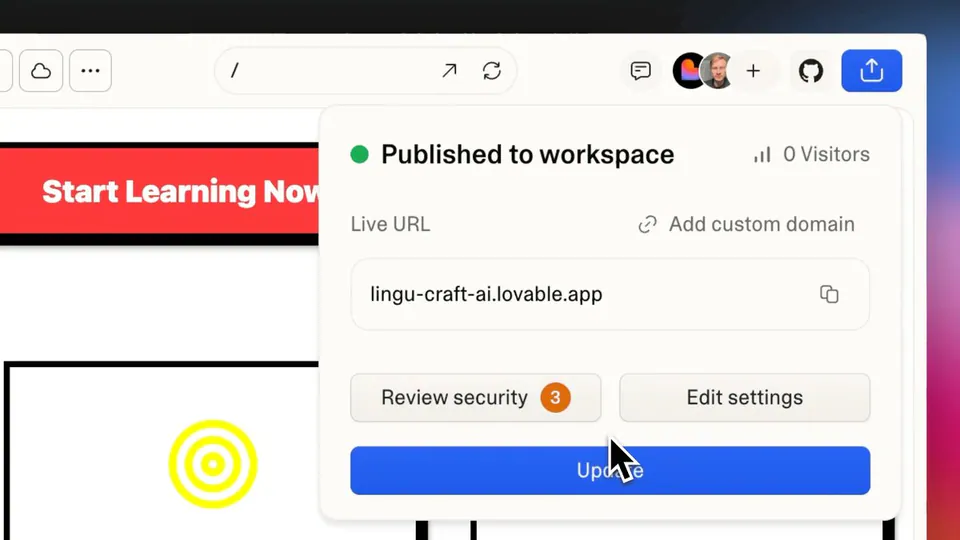
The AI app builder Lovable has launched a background security suite that automatically scans applications for vulnerabilities during the publishing process. The system performs a basic check in under 15 seconds, specifically targeting missing Row-Level Security (RLS) policies—database rules that control data access—and authorization gaps. This update automates the previously manual Security Checker 2.0 workflow as a default gate.
Basic Scan Time
10–15 seconds
Deep Scan Time
2–4 minutes
Accuracy Gain
20% reduction in ignored findings
Scan Types
Basic, Deep, and Dependency
Enterprise Controls
Scheduled scans and Publish blocking

As agentic coding accelerates deployment, security is often a bottleneck for non-experts. By adopting agentic remediation, Lovable follows a pattern seen in Replit and its Auto-Protect service. A new Security Memory feature further refines this by learning from user feedback to reduce false positives and improve scanning accuracy over time.

Users can now enable an opt-in auto-fix agent to resolve low-risk findings during coding. While basic scans are standard, deep AI-powered reviews are available for architectural audits. Enterprise teams can schedule these scans on a weekly cadence and implement publish blocking for critical security issues to ensure no vulnerable code reaches production.

Lovable
Lovable
@Lovable
X

Starting today, Lovable automatically runs a security scan before you publish. In about 10–15 seconds, it checks for the most common and impactful issues, database misconfigurations, missing RLS policies, and authorization gaps. https://t.co/x1KwyWgOLW

20retweets212likes
View on X
Still wondering? A few quick answers below.

The auto-fix agent is an opt-in feature that autonomously resolves security vulnerabilities identified during scans. It is designed to address non-breaking changes, such as low-risk configuration errors or missing policies, directly within the developer's coding flow without impacting the application's existing functionality or user experience.

Security Memory allows the platform to learn from how users interact with security findings. By remembering when a user accepts, dismisses, or provides context for a specific flag, the system builds a project-specific security profile. This reduces repetitive warnings and has demonstrated a 20% reduction in ignored findings.

Basic scans run automatically in 10–15 seconds during the publish flow, checking for common configuration issues like database Row-Level Security. Deep scans are AI-powered reviews that take 2–4 minutes to analyze the entire codebase for complex logic flaws and vulnerabilities unique to the application's specific architecture.

Every HeadsUpAI update is written based on its original source and reviewed before it's published. Read our editorial standards →

Share this update