HeadsUpAI

Lovable Adds Parallel Subagents to Handle Complex App Discovery

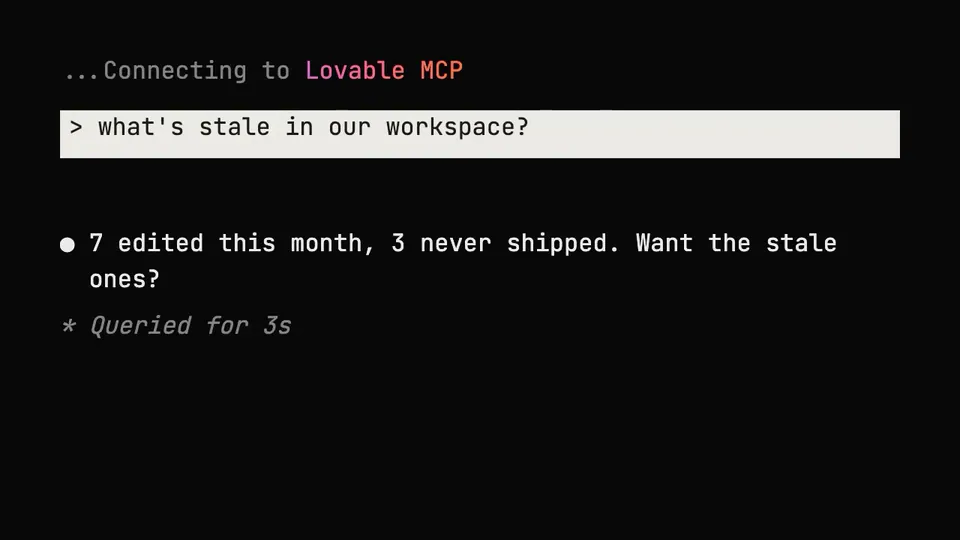
Lovable, an AI app builder, launched subagents to handle project discovery in parallel. These specialized helpers perform background research, codebase exploration, and QA. By delegating these tasks, the main agent avoids the sequential bottlenecks that typically slow down builds on large, multi-file projects.
Availability
Live for all users
Subagent permissions
Read-only
Task execution
Parallel
Primary functions
Research, exploration, and QA
Cost impact
Potential reduction via model routing

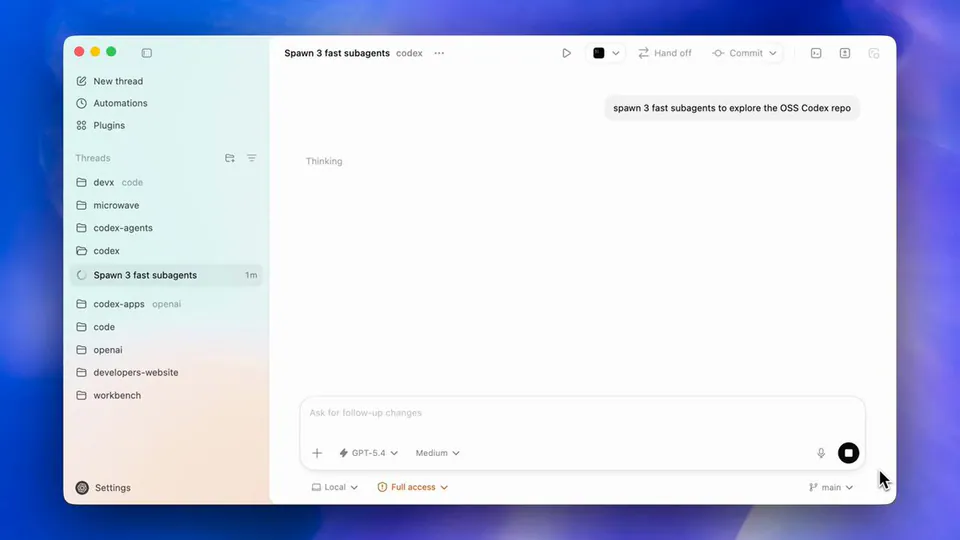
This shift toward multi-agent orchestration follows OpenAI Codex's parallel subagent workflows and Devin's managed team architecture. By giving each subagent a fresh context window, Lovable ensures the main agent's workspace stays clean. This allows the primary agent to maintain focus on code changes while receiving high-level summaries.

Subagents are strictly read-only, ensuring they can explore freely without risking unintended project modifications. The system automatically routes these lighter tasks to cheaper models, reducing overall build costs. You can track subagent activity in the activity view or explicitly trigger them for deep research; the feature is live for all users.

Lovable
Lovable
@Lovable
X

Subagents, now in Lovable. Lovable can now spin up helpers behind-the-scenes to research, review, and QA, in parallel. https://t.co/kzoP4ACWf9

18retweets271likes
View on X

Still wondering? A few quick answers below.

Subagents are specialized AI helpers that Lovable creates to handle background tasks like researching codebases, searching the web, and performing quality assurance. They operate in parallel alongside the main agent to speed up the discovery process. This multi-agent approach allows the system to handle complex, large-scale projects more efficiently without slowing down the build.

The main Lovable agent acts as a coordinator that delegates specific research or exploration tasks to subagents. Each subagent starts with a fresh context window, which is the short-term memory used to process information. They report their findings back to the main agent as summaries, keeping the primary workspace clean and focused on making actual code changes.

No, subagents are strictly read-only and cannot modify your project files. They are designed to explore and research your codebase without the risk of making unintended changes. Only the main agent has the authority to write or edit code, ensuring that the parallel research process remains safe and predictable for the user.

There is no extra cost to use subagents as they are now a core part of how the platform operates. In some cases, they may actually reduce your total bill. Lovable routes lighter subagent tasks to faster, cheaper AI models, saving the most powerful and expensive models for the complex code generation work that matters most.

You can monitor subagent activity in real-time through the activity view alongside your usual project edits and reads. This transparency allows you to trace any decision or piece of research back to the specific subagent that produced it. While they usually run automatically, you can also explicitly prompt Lovable to use subagents for deep research tasks.

Share this update