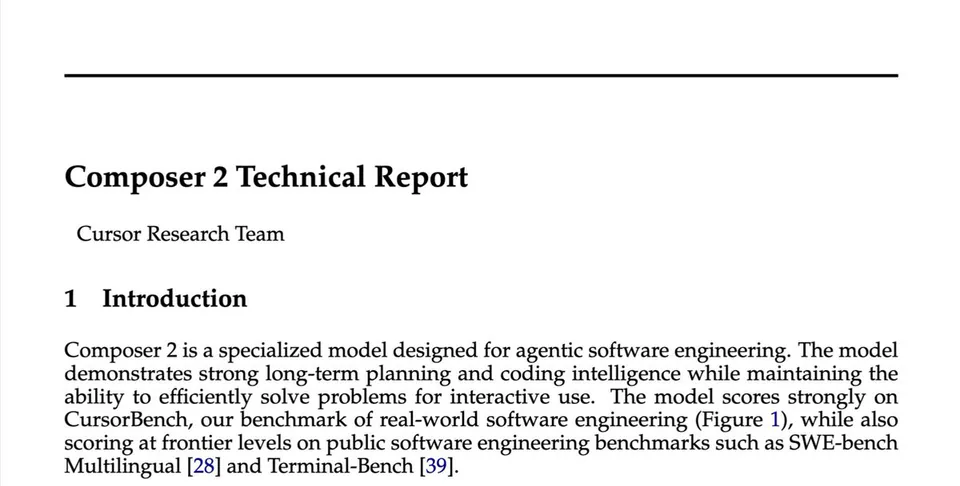
Fireworks AI revealed the infrastructure behind Cursor's Composer 2, using disaggregated sampling to run RL across multiple global clusters. By shipping only 2% of model weights as compressed deltas, they eliminated the need for a single massive mega-cluster. This shift makes frontier-scale RL training economically viable using fragmented, multi-region GPU capacity.
Fireworks AI introduced a disaggregated sampling architecture that exploits weight sparsity in Reinforcement Learning. Between consecutive checkpoints, over 98% of weights in bf16 remain bit-equivalent. Instead of transferring a full 1TB model, the system sends a 20GB compressed delta, reducing cross-region traffic by 98% while maintaining exact reconstruction.
This approach challenges the assumption that frontier RL requires a single, co-located mega-cluster. By making policy updates small, teams can use fragmented GPU capacity across different regions. Cursor used this to train Composer 2 across four global clusters, turning distributed inference into a unified pool for generating training data.
You can implement this via the Fireworks Training SDK, which supports fully managed RL or a "bring your own trainer" model. The platform provides OpenAI-compatible sampling endpoints and a weight update API. These tools bound policy staleness to a few minutes and keep in-memory GPU swaps under 60 seconds.