HeadsUpAI

Cursor Details the Agent Harness Engineering That Drives Coding Performance

Cursor, an AI-first code editor built for pair-programming with AI, detailed the engineering behind its agent harness—the software environment that provides models with tools and context. The team is moving away from static indexing toward dynamic context discovery, where the agent autonomously pulls relevant information mid-task to reduce token waste.

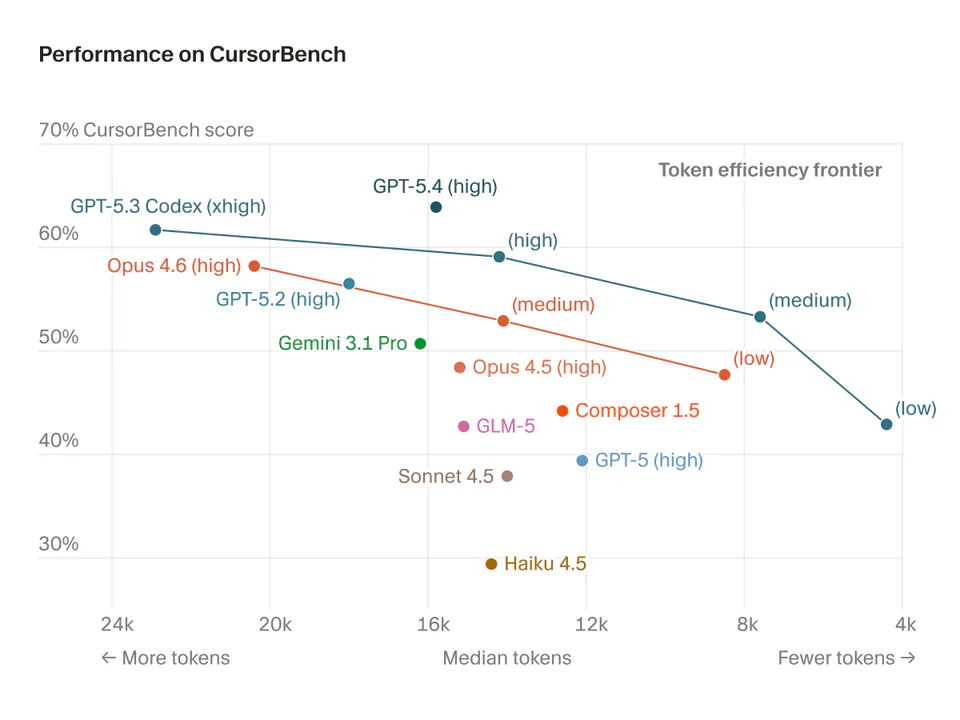
This shift emphasizes that frontier models require deep customization to reach peak utility. Cursor tunes the harness for specific model quirks, such as providing patch-based editing for OpenAI models. This mirrors NVIDIA's agent-native inference optimizations that prioritize throughput and memory hierarchy over general-purpose model serving.

You can observe these improvements through the "Keep Rate" metric, which tracks how much agent-generated code remains in a codebase. While the harness supports mid-chat model switching, the team recommends staying with one model per session to avoid cache penalties. These optimizations are live for users of the Cursor 3 workspace.

Cursor
Cursor
@cursor_ai
X

Our agent harness makes models inside Cursor faster, smarter, and more token-efficient. Here's how we test improvements to the harness, monitor and repair degradations, and customize it for different models. https://t.co/YIXcEZW6ud

49retweets609likes
View on X
Still wondering? A few quick answers below.

The agent harness is the specialized software environment that surrounds AI models within the Cursor editor. It manages how models interact with tools, codebase context, and user requests. By customizing this harness for specific models, Cursor makes them faster and more token-efficient than they would be in a generic environment.

Cursor uses a metric called Keep Rate to track what fraction of agent-generated code remains in a user's codebase over time. They also use language models to analyze user responses for satisfaction signals, such as whether a user moved to the next feature or pasted a stack trace indicating an error.

When a user switches models, Cursor automatically swaps to a harness customized for the new model's specific prompts and tools. To maintain continuity, the system generates a conversation summary at the time of the switch. This summary helps the new model understand the previous context while reducing the cache miss penalty.

Dynamic context discovery is a system where the AI agent autonomously pulls relevant information into its context window while it works. Instead of relying on static codebase maps or manual file attachments, the agent decides when to fetch past conversations, active terminal sessions, or specific code snippets needed to complete a task.

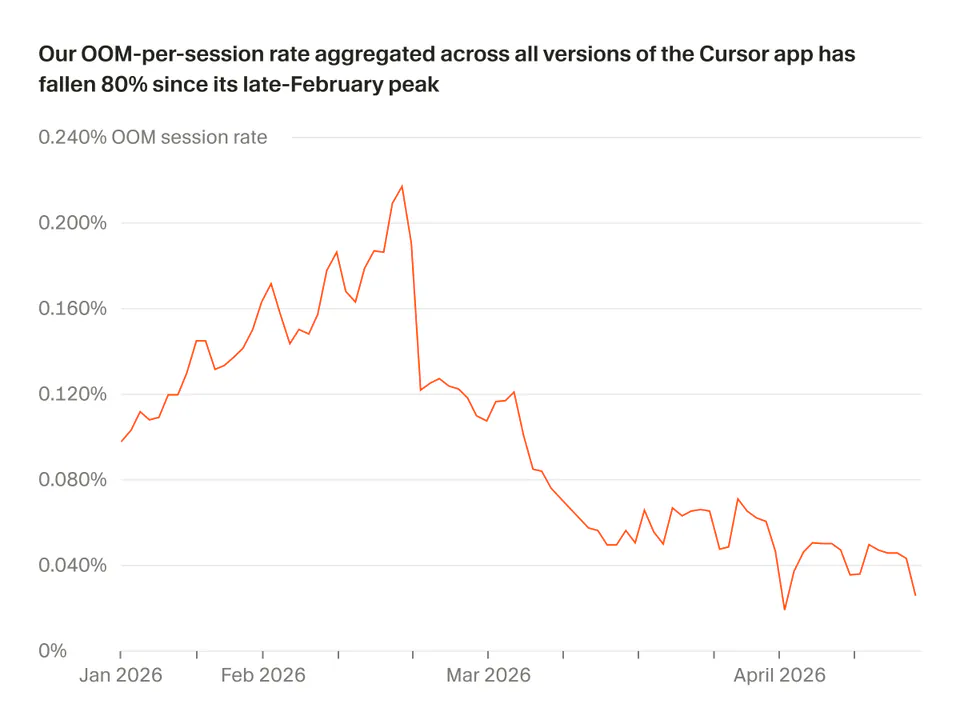
Cursor treats unknown tool errors as bugs and uses automated Cloud Agents to monitor logs and create investigation tickets. To prevent context rot, where accumulated errors degrade model performance, the system classifies errors by cause and uses anomaly detection alerts to catch regressions that exceed baseline failure rates for specific tools.

Share this update