HeadsUpAI

HeyGen Adds HDR Rendering to HyperFrames for Professional Grade AI Video

· Updated

HeyGen, an AI video platform, added HDR (High Dynamic Range) rendering to HyperFrames, its open-source framework for building videos with HTML. The renderer now automatically probes media assets and enables HDR output if it detects a high-fidelity color space, unlocking richer highlights and deeper shadows.

This fidelity upgrade follows recent updates focused on the developer experience, including the HyperFrames skill for Claude Design and a plugin for OpenAI Codex. By adding HDR, HeyGen is bridging the gap between "vibe coding" and professional production, mirroring the industry-wide shift toward cinematic 4K generation.

Access these features by updating to hyperframes version 0.4.37. The engine now supports a --hdr flag to force high-dynamic output or a --sdr flag to stick to standard definition. Because the framework is open source under the Apache 2.0 license, you can integrate this HDR pipeline into commercial workflows without fees.

HeyGen
HeyGen
@HeyGen
X

This is the upgrade your video needed HyperFrames now renders in HDR Infinite colors unlocked Higher contrast. Richer colors. Better highlights and shadows See the difference https://t.co/CZihTSbz3N

23retweets229likes
View on X

Still wondering? A few quick answers below.

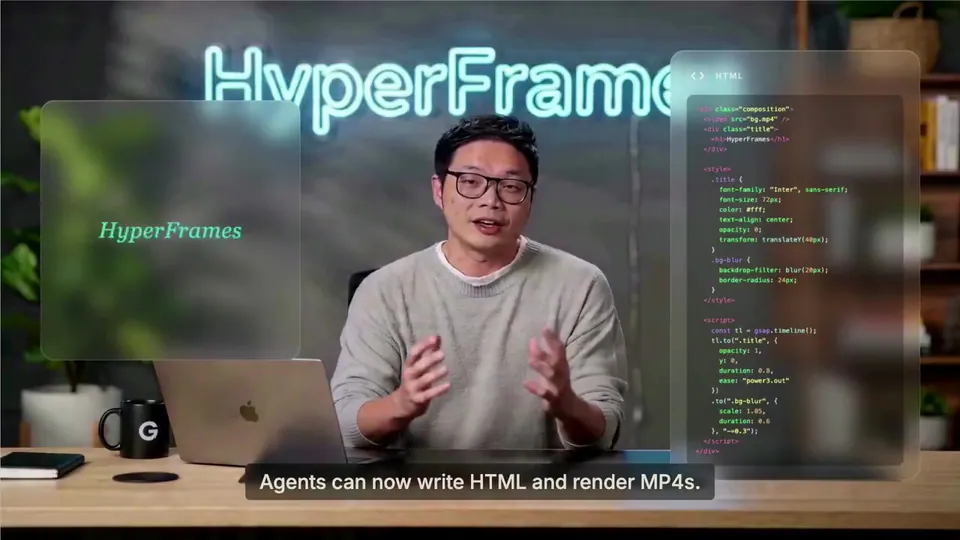
HyperFrames is an open-source video rendering framework from HeyGen that allows users and AI agents to create videos using standard web technologies like HTML, CSS, and GSAP. Unlike traditional video editors, it treats video as code, enabling deterministic rendering where the same input always produces an identical MP4 file for automated production pipelines.

The HyperFrames renderer now includes an automatic detection system that probes all image and video sources in a composition. If any asset uses a High Dynamic Range color space, the engine automatically enables HDR output. This process unlocks higher contrast and richer color depth, ensuring that highlights and shadows maintain professional-grade detail during the final render.

Yes, HyperFrames is fully open source under the Apache 2.0 license. This means individuals and companies can use the framework commercially at any scale without paying per-render fees or seat caps. The source code is available on GitHub, allowing developers to redistribute, modify, and integrate the rendering engine into their own applications or agentic workflows.

While both tools drive headless Chrome for deterministic video rendering, HyperFrames is built on standard HTML and CSS rather than React components. This allows AI agents to author videos using languages they already understand natively. Additionally, HyperFrames is released under the permissive Apache 2.0 license, whereas Remotion uses a source-available license that requires payment for certain commercial use cases.

Users can manage color output using specific flags in the HyperFrames command line interface. While the system defaults to automatic detection, you can use the --hdr flag to force High Dynamic Range output or the --sdr flag to force standard definition and skip the probing process. These controls are available starting with the version 0.4.37 release.

Share this update