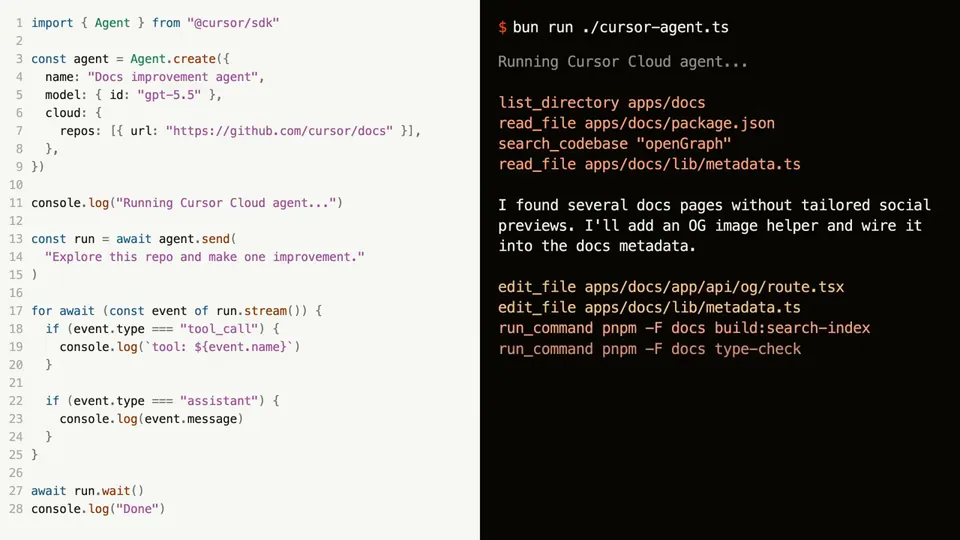
With the Cursor SDK, you can build your own agents with Composer 2.5. It's now available in Python and TypeScript. This long weekend, Composer usage is 90% off in the SDK. We're excited to see what you build! https://t.co/8grHpJQtOu
Cursor Launches Python SDK to Turn Agentic Coding Into Programmable Infrastructure
Cursor, an AI-first code editor, launched a Python SDK in public beta to make its agentic runtime scriptable. This follows the Cursor SDK launch for TypeScript, allowing developers to programmatically invoke the same orchestration layer and
composer-2.5 model used within the IDE.- Availability
- Public beta
- Supported languages
- Python and TypeScript
- Primary model
- Composer 2.5
- Execution runtimes
- Local, Cursor-hosted, and Self-hosted
- Launch promotion
- 90% off Composer usage (long weekend)
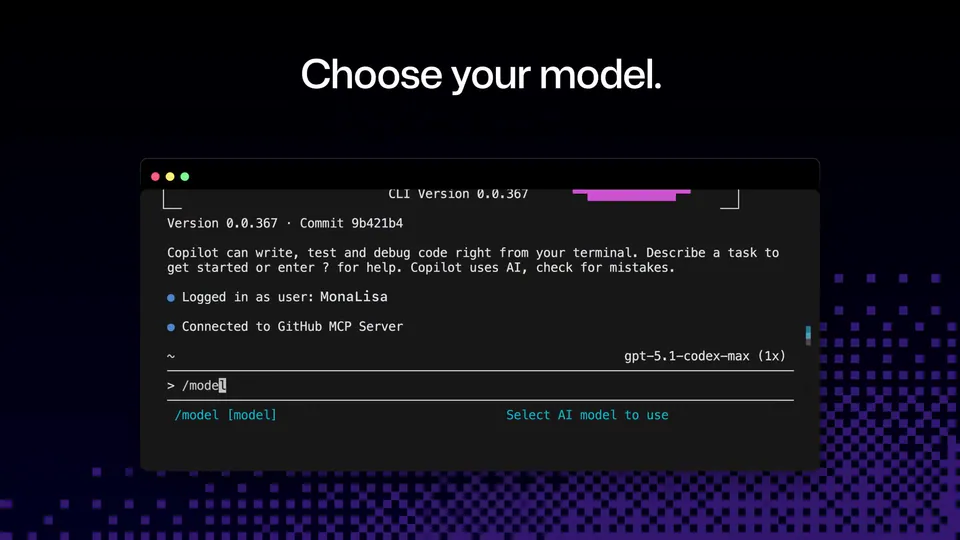
By bringing its reasoning capabilities to Python, Cursor is positioning its platform as a programmable infrastructure layer. This move mirrors GitHub Copilot's SDK by targeting engineers who use Python for automation. It shifts agentic coding from a reactive chat interface into a headless, scriptable tool.
You can use the cursor-sdk package to automate repository-wide refactors or build custom CI/CD agents. The SDK supports local and cloud runtimes, including the ability to open pull requests. Cursor is offering a 90% discount on Composer 2.5 usage via the SDK through the long weekend.
Cursor
@cursor_ai
71retweets1.1klikes
View on XStill wondering? A few quick answers below.
The Cursor Python SDK is a programmatic interface that allows developers to control Cursor agents using Python code. It provides access to the same agentic runtime and orchestration layer found in the Cursor IDE, enabling users to script complex coding tasks, manage repositories, and interact with models like Composer 2.5 outside of the standard code editor environment.
You can install the library using the command uv pip install cursor-sdk. To use it, you must provide a Cursor API key and specify whether the agent should run locally against files on your disk or in a Cursor-hosted cloud VM. The SDK supports both synchronous and asynchronous clients, making it suitable for scripts, bots, and concurrent agent orchestration.
Yes, the SDK fully supports Composer 2.5, which is Cursor's latest model optimized for multi-step engineering tasks. Users can specify this model when creating an agent and can even adjust model-specific parameters, such as reasoning effort or thinking levels, to control how the agent deliberates before producing code changes or summaries.
The SDK has native support for cloud agents that run in isolated virtual machines. You can programmatically list connected repositories, start an agent against a specific GitHub or GitLab repo, and configure it to automatically create pull requests once it finishes a task. This allows for headless execution of coding workflows that do not require a local workspace.
Usage of the SDK follows the same pricing and request pools as the Cursor IDE and Cloud Agents. All spend is tracked in a team usage dashboard under a specific SDK tag. For the current launch period, Cursor is offering a 90% discount on Composer usage through the SDK to encourage developers to build new agentic tools.