HeadsUpAI

Anthropic Launches Dreaming to Help Claude Agents Self Improve Between Sessions

· Updated

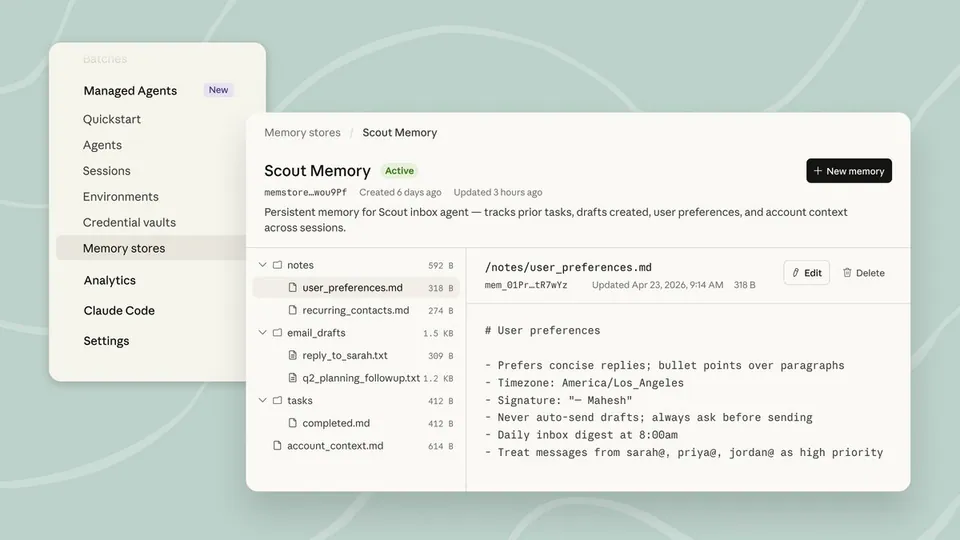
Anthropic launched Dreaming in research preview for Claude Managed Agents, a platform for hosting autonomous (self-acting) AI systems. Dreaming extends Claude's native memory stores by reviewing past sessions to extract patterns. This lets agents refine knowledge between sessions, learning from experience without manual developer intervention.
Dreaming status
Research preview
Outcomes status
Public beta
Multiagent orchestration status
Public beta
Webhooks status
Public beta
Outcomes success gain
Up to 10 points
Docx generation success
+8.4%
Pptx generation success
+10.1%
Availability
Claude Platform

This update addresses the reliability gap in agentic AI by shifting from reactive prompting to proactive self-improvement. By introducing Outcomes, developers can enforce a success rubric (scoring guidelines) that a separate grader model evaluates. This adds to Anthropic's multi-agent evaluator loops to ensure outputs meet a quality bar before completion.

You can now use multiagent orchestration to delegate complex jobs to specialized subagents working in parallel. This architecture is already used by teams like Harvey for long-form drafting. The expansion follows Anthropic's Colossus 1 data center access to provide the compute required for high-concurrency agentic workflows.

Claude
Claude
@claudeai
X

Live from Code with Claude: we're launching dreaming in Claude Managed Agents as a research preview. Outcomes, multiagent orchestration, and webhooks are now in public beta. https://t.co/p4DFRzFEd8

1.1kretweets15klikes
View on X

Still wondering? A few quick answers below.

Dreaming is a scheduled background process that reviews past agent sessions and memory stores to identify recurring patterns and mistakes. It curates an agent's memory between active sessions, allowing the system to self-improve and refine its workflows without manual human steering. This capability is currently available as a research preview on the Claude Platform.

Outcomes allow developers to define a success rubric for an agent's task. A separate grader model evaluates the agent's output against this criteria in an isolated context window. If the output fails to meet the rubric, the agent is prompted to iterate and self-correct until the quality bar is met, improving task success rates by up to 10 points.

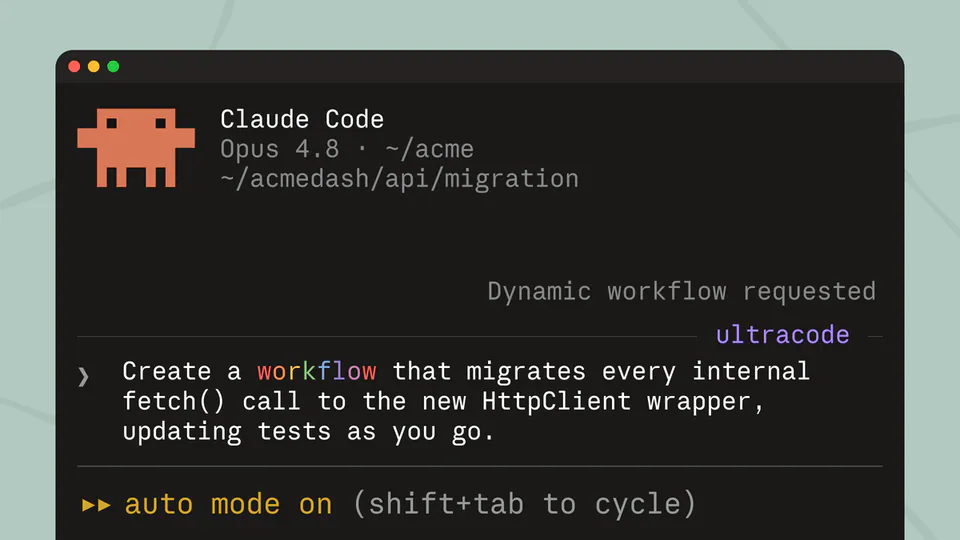
Multiagent orchestration is a framework where a lead agent decomposes a complex job into smaller tasks and delegates them to specialized subagents. These subagents can run in parallel using their own specific models and tools while sharing a common filesystem. All actions are persistent and traceable through the Claude Console, providing full visibility into the delegation process.

Dreaming is currently available as a research preview, and developers must request access through a specific form on the Anthropic website. Outcomes, multiagent orchestration, webhooks, and native memory are available in public beta for all developers building with Managed Agents on the Claude Platform. Users can deploy their first agent through the Claude Console.

Standard memory allows an agent to capture information as it works during a live session. Dreaming is a distinct process that happens between sessions, reviewing the entire memory store to find high-signal patterns that a single agent might miss. It restructures and curates these memories so the agent stays efficient and high-performing as its knowledge base grows.

Share this update