HeadsUpAI

OpenAI Launches Codex Chrome Plugin for Parallel Background Browser Tasks

· Updated

OpenAI launched a Codex Chrome plugin for macOS and Windows, enabling its agentic AI platform to operate directly within the browser. The extension allows Codex to run tasks in parallel across background tabs. This arrives alongside Codex for Work, which expanded the tool's scope to general professional automation.
Platform support
macOS and Windows
Browser support
Google Chrome
Execution mode
Parallel background tabs
Regional availability
Global excluding EU and UK
Installation
Via Codex app

This shift solves major authentication requirements for autonomous agents. While previous versions of Codex's background computer use could navigate desktop apps, the Chrome plugin targets web-based workflows. By operating as an extension, the agent inherits existing sessions to act on private dashboards that are usually inaccessible to external bots.

You can now use Codex to automate browser-based toil, such as debugging web flows or updating records. The agent dynamically chooses between its own plugins and the Chrome browser to handle logged-in sites. The extension is available today within the Codex app for all regions except the EU and UK.

OpenAI
OpenAI
@OpenAI
X

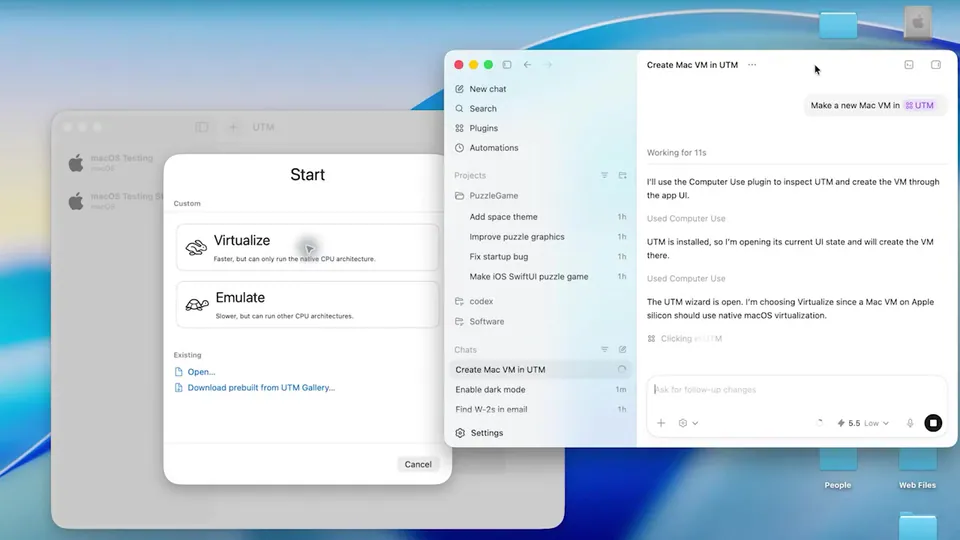
Codex now works directly in Chrome on macOS and Windows. It’s even better at working with apps and sites in Chrome, and now works in parallel across tabs in the background without taking over your browser. To get started, install the Chrome plugin in the Codex app. https://t.co/pjtHd9gC69

1.3kretweets13klikes
View on X
Still wondering? A few quick answers below.

The Codex Chrome plugin is an extension for macOS and Windows that allows the Codex agent to interact directly with websites and web applications. It enables the agent to perform multi-step tasks within the browser, such as conducting research, updating CRMs, or debugging browser flows, while leveraging the user's existing signed-in sessions.

The extension is designed to work in parallel across multiple browser tabs in the background. This means Codex can execute various steps of a workflow simultaneously without taking over the user's active browser window or interrupting their current work. It manages these background processes independently while maintaining the user's authenticated state.

Codex dynamically evaluates each step of a task to choose the most effective tool. It uses specialized plugins when they are better suited for the job, but switches to the Chrome extension when a task requires access to a website where the user is already logged in or needs specific browser-based actions.

The extension is currently available to users of the Codex app on macOS and Windows. While it has launched globally, it is not yet available in the European Union or the United Kingdom. OpenAI has stated that support for these regions is planned for a future update.

To begin using the extension, users must install it directly through the Codex app. Once the plugin is active, it connects the desktop agent's orchestration capabilities with the Chrome browser, allowing it to read and act on sites using the user's existing cookies and authenticated browser environment.

Share this update