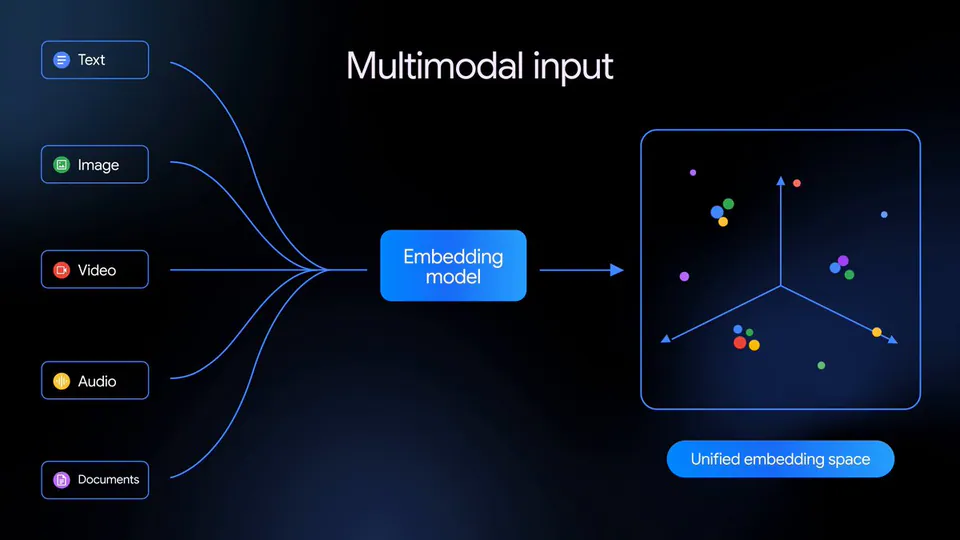
Here’s everything that happened this week 🚀: — @GoogleMaps released 2 new features, Ask Maps to handle your most complex questions about places and trips and Immersive Navigation for intuitive routes, all with some help from the latest Gemini models — New Gemini features rolled out to @GoogleWorkspace, making @GoogleDocs, Sheets, Slides, and @GoogleDrive more helpful — In collaboration with Imperial College London and the UK’s NHS, we published breast cancer research that demonstrates AI’s potential to detect 25% of interval cancers previously missed by conventional methods — We introduced Gemini Embedding 2 (in preview), our first natively multimodal embedding model, which enables semantic understanding across text, images, videos, audio, and documents inputs all in a single model — We also launched project spend caps for the Gemini API in @GoogleAIStudio, enabling you to set a dollar amount for maximum spend at https://t.co/NApz8LVHll — Gemini in @GoogleChrome began rolling out on desktop to signed-in users (18+) in India, New Zealand, and Canada, with expansions to mobile and more regions and languages coming throughout the year