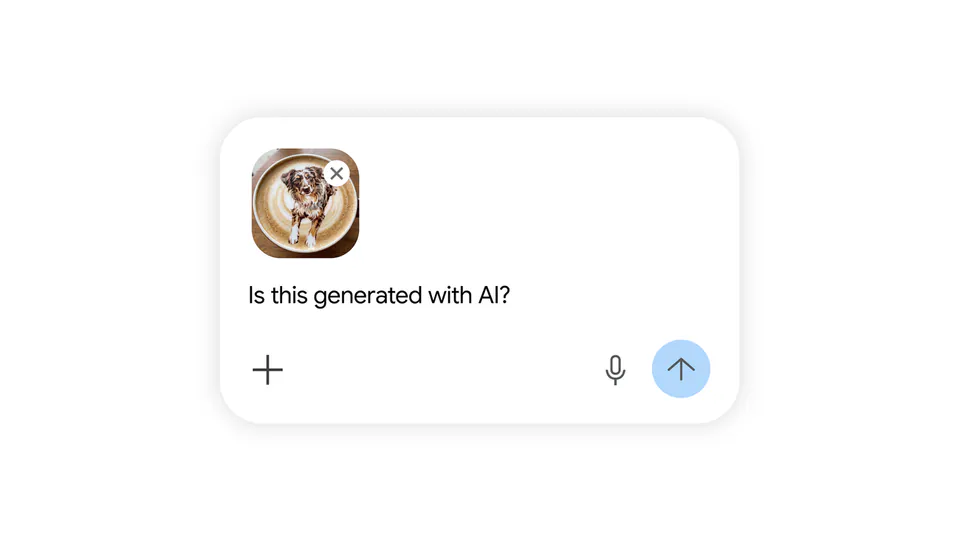
We’re adding new ways for people to identify AI-generated images and understand where they came from. In addition to C2PA Content Credentials, images now also contain a SynthID watermark, and can be identified using a public verification tool to check whether an image was made by OpenAI products. https://t.co/qo0l4vyWli
OpenAI Adds SynthID Watermarks and Public Verification to AI Images
OpenAI is strengthening its content provenance by becoming a C2PA Conforming Generator Product. This ensures that images created via ChatGPT Images 2.0, Codex, or the OpenAI API carry standardized, cryptographic metadata. Additionally, the company is integrating Google's SynthID watermarking to provide a secondary layer of identification that remains even if metadata is stripped.
- Provenance signals
- C2PA metadata and SynthID watermark
- Supported products
- ChatGPT, OpenAI API, and Codex
- Verification tool
- Public preview available
- Watermark durability
- Resists screenshots and resizing
- Conformance status
- C2PA Conforming Generator Product
Metadata-based approaches like C2PA are often lost when images are screenshotted or resized. By layering SynthID alongside Content Credentials, OpenAI is addressing this durability gap with a signal that survives common transformations. This dual-signal approach represents the current industry standard for trustworthy AI image attribution.
You can now access a preview of a public verification tool to check if an image was generated by OpenAI products. The tool detects both C2PA metadata and SynthID watermarks, though it currently only supports content from OpenAI's own models. These provenance signals are being rolled out automatically to images generated through the API and ChatGPT.
OpenAI
@OpenAI
361retweets3.9klikes
View on XStill wondering? A few quick answers below.
C2PA uses cryptographic metadata and digital signatures to attach origin information directly to a file, but this data can be lost if an image is screenshotted or resized. SynthID, developed by Google DeepMind, embeds an invisible watermark into the image pixels that is more durable and survives most common edits.
OpenAI has launched a preview of a public verification tool where you can upload an image to check for provenance signals. The tool scans the file for C2PA Content Credentials and SynthID watermarks to confirm if the media originated from ChatGPT, the OpenAI API, or the Codex platform.
No detection method is foolproof, and OpenAI takes a cautious approach when signals are missing. If the verification tool does not detect metadata or a watermark, it will not make a definitive conclusion. This is because provenance signals can sometimes be intentionally stripped or lost through extreme file modifications.
These multi-layered provenance signals are being integrated into images generated through ChatGPT, the OpenAI API, and Codex. While the current verification tool is limited to OpenAI content, the company plans to support cross-industry standards to make it possible to verify AI-generated media across different platforms and tools in the future.
OpenAI uses a combination of visible and invisible signals depending on the medium. While images now use invisible SynthID watermarks and C2PA metadata, the company has previously implemented visible watermarks for its Sora video model and specific audio watermarks for Voice Engine to help people identify AI-generated content across different types of media.