HeadsUpAI

Cursor Adds Effort Levels to Bugbot for Deeper PR Reasoning

· Updated

Cursor, an AI-native code editor, launched effort levels for Bugbot, its autonomous pull request review agent. This feature allows users to toggle between default and high-effort modes, effectively scaling inference-time compute (the processing power used during a model's reasoning phase) to deepen the agent's analysis of code changes.
Bug detection increase
35% (High effort mode)
Issue resolution rate
80% (Default effort mode)
Availability
Usage-based Bugbot users
Pricing (Teams)
$40 per user per month
PR limit per license
200 pull requests per month

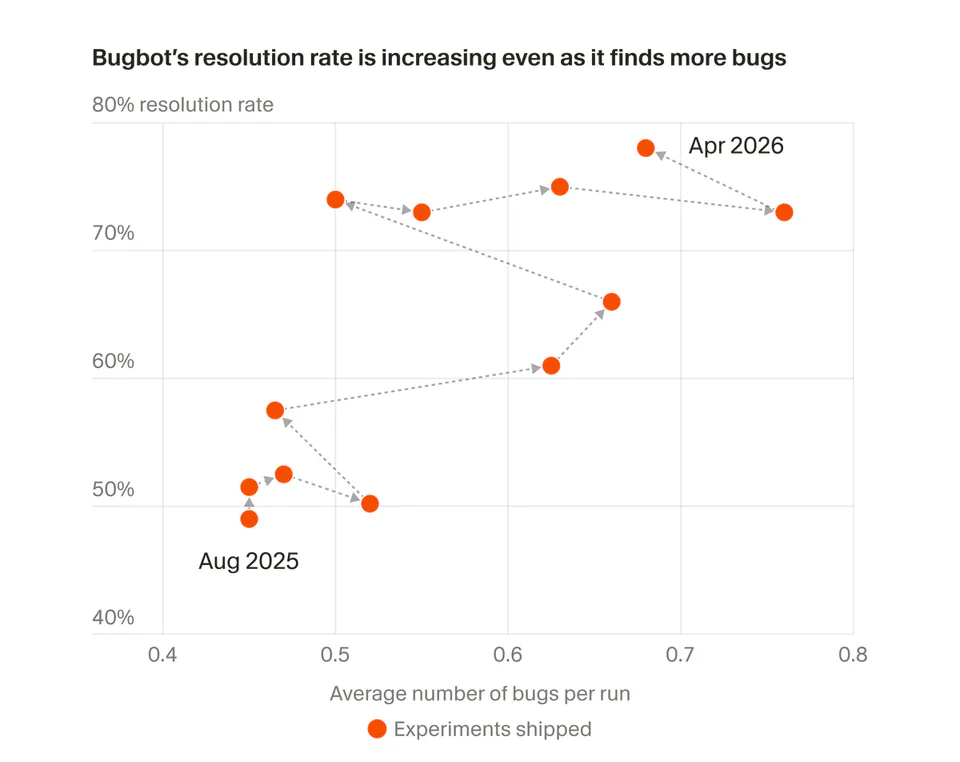
This update shifts AI code review from a static scan to a dynamic reasoning task. It follows the launch of Cursor Bugbot Autofix, which repairs the issues it finds. By increasing "thinking" time, the agent catches 35% more bugs without increasing the rate of false positives.

You can configure these levels through the Bugbot dashboard to match code criticality. For example, the Cursor team uses high effort for infrastructure changes while keeping the default setting for routine PRs. The feature is available now for all users on usage-based Bugbot.


Cursor
Cursor
@cursor_ai
X

You can now customize how deeply Bugbot thinks during a PR review. At Cursor, we use high effort for changes to our infrastructure and backend so Bugbot detects more issues. Other PRs get default effort. https://t.co/XRGFMHB2LL

64retweets726likes
View on X

Still wondering? A few quick answers below.

Bugbot is an autonomous code review agent from Cursor that analyzes pull request diffs to identify bugs, security vulnerabilities, and code quality issues. It operates within GitHub or GitLab workflows, providing explanations and fix suggestions. Users can also trigger it manually or use an autofix feature to resolve reported issues automatically.

Effort levels allow users to customize the depth of reasoning Bugbot applies during a pull request review. By increasing the effort level, the agent uses more inference-time compute to perform a more thorough analysis. This deeper thinking process enables the agent to detect significantly more issues in complex codebases compared to the standard review mode.

Default effort is the standard review depth where approximately 80 percent of detected issues are resolved by users. High effort is a more intensive reasoning mode that finds 35 percent more bugs than the default setting. Cursor recommends using high effort for critical infrastructure or backend changes while using default effort for routine pull requests.

Teams pay 40 dollars per user per month for Bugbot reviews. A user is defined as someone who authored a pull request reviewed by the agent during that billing cycle. Each license includes a pooled cap of 200 pull requests per month, and team admins can set seat limits to control monthly costs.

Effort levels are available to all users on usage-based Bugbot plans. These settings can be configured directly from the Bugbot dashboard. While individual and team plans include a limited free tier of pull request reviews each month, the customizable effort levels are specifically tied to the usage-based pricing model for deeper reviews.

Share this update